
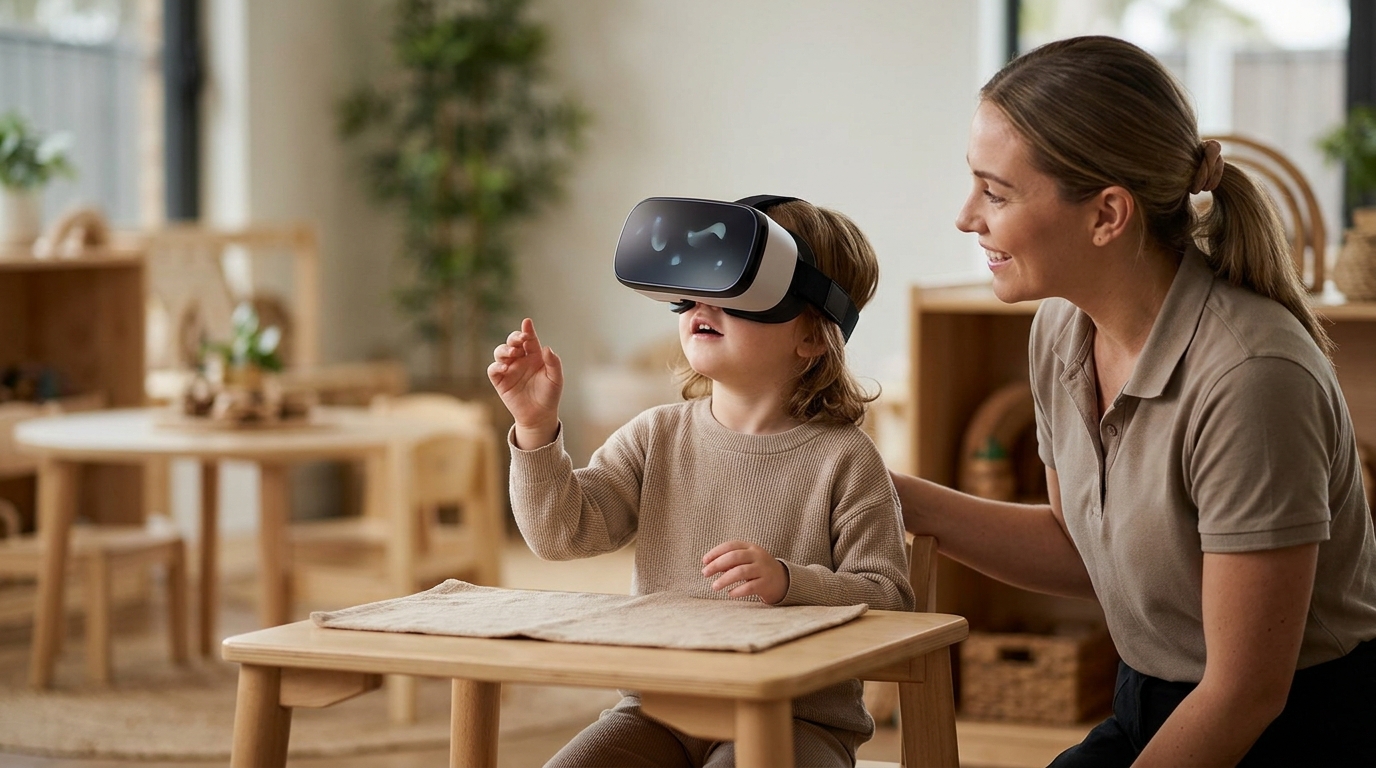
Virtual reality learning in early childhood education uses immersive digital environments to support sensory exploration and cognitive engagement. At Little Scholars, the Wondernest VR program introduces children to interactive, age-appropriate virtual experiences that complement play-based learning. This approach helps young learners develop spatial awareness, curiosity, and confidence in a safe, supervised setting.
The Role of VR in Early Learning
At Little Scholars, educators integrate VR sessions into the daily curriculum as one of many learning tools. The Wondernest VR program is designed specifically for young children, ensuring content is developmentally appropriate and engaging. Sessions are short, guided, and always supervised by qualified educators who monitor each child’s comfort and engagement levels.
How Wondernest VR Supports Development
Wondernest VR is an interactive virtual reality platform tailored for early childhood education. It features colorful, animated environments that encourage children to explore, ask questions, and make choices. These activities support the development of fine motor skills, hand-eye coordination, and problem-solving abilities. For example, a child might navigate a virtual garden, identifying plants and animals while practicing counting and categorization.
The program also fosters social skills when children participate in group VR experiences. They learn to take turns, communicate their ideas, and collaborate on simple tasks. This social dimension is crucial in the early years, as it lays the foundation for cooperative learning and emotional regulation. Educators at Little Scholars carefully select VR content that aligns with the children’s current interests and developmental stages.
Safety and Supervision in VR Programs
Safety is a top priority in any early childhood VR program. Little Scholars ensures that all VR equipment is child-sized, hygienic, and regularly sanitized. Sessions are limited in duration to prevent overstimulation or fatigue. Educators are trained to recognize signs of discomfort or disorientation and can pause or end a session immediately if needed.
The Wondernest VR program operates under strict guidelines that prioritize child wellbeing. There are no violent or frightening elements in the content. Instead, the focus is on wonder, discovery, and gentle interaction. This approach ensures that children remain engaged without feeling overwhelmed. Parents are also kept informed about the program’s structure and safety protocols during campus tours and orientation sessions.
Integrating VR with Play-Based Learning
Virtual reality works best when it is part of a broader, play-based curriculum. At Little Scholars, VR sessions are often followed by hands-on activities that reinforce what children experienced in the virtual environment. For instance, after exploring a virtual ocean, children might create their own sea creatures using art materials or discuss marine life during circle time. This blend of digital and physical learning helps solidify concepts and encourages creative expression.
The integration of VR also supports the Abecedarian reading approach, which emphasizes conversational and interactive literacy. Children can engage with virtual storybooks where characters respond to their choices, making reading a dynamic and participatory experience. This method helps build early literacy skills in a way that feels like play rather than instruction.
Practical Implementation at Little Scholars
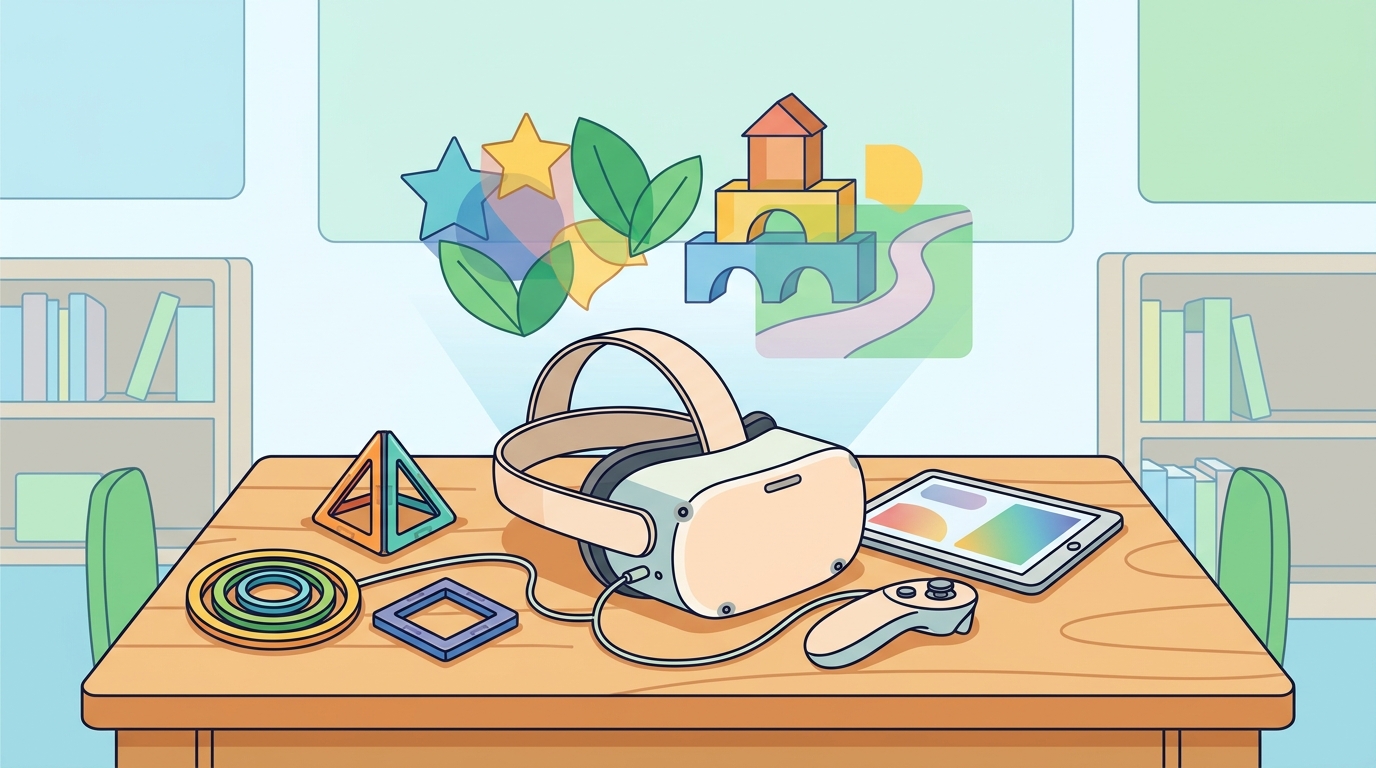
Little Scholars campuses across South East Queensland have access to the Wondernest VR program as part of their extracurricular offerings. The program is available to children in the junior and senior kindy age groups, where cognitive and motor skills are sufficiently developed to benefit from VR experiences. Educators plan VR sessions around the children’s weekly themes, ensuring relevance and continuity in learning.
For example, during a unit on seasons, children might use VR to explore how weather changes affect different environments. They can observe snowfall in a virtual winter landscape or sunshine in a summer beach setting. These experiences spark curiosity and provide a foundation for deeper discussions about nature and science. The program is flexible, allowing educators to adapt sessions based on the group’s energy and interests. according to Exploring the Opportunity
Key Takeaways
- Virtual reality in early childhood education is a tool for extending play, not replacing it.
- Wondernest VR is an age-appropriate platform designed specifically for young learners.
- VR sessions at Little Scholars are short, supervised, and focused on safety and comfort.
- The program supports cognitive, social, and motor skill development through interactive experiences.
- VR is integrated with hands-on activities to reinforce learning and encourage creativity.
- Educators carefully select content that aligns with children’s developmental stages and interests.
Frequently Asked Questions
Is virtual reality safe for young children?
Yes, when used appropriately. Little Scholars uses the Wondernest VR program, which is designed for early childhood. Sessions are short, supervised, and free from frightening content. Educators monitor each child’s comfort and can pause the experience at any time.
How long are VR sessions at Little Scholars?
VR sessions are typically short, lasting only a few minutes at a time. This duration is chosen to maintain engagement without causing overstimulation or fatigue. The exact length may vary based on the group’s energy and the specific activity. according to Frontiers Validation of
Do children need to wear special equipment?
Children use child-sized VR headsets that are regularly sanitized and maintained. The equipment is designed to be lightweight and comfortable for young users. Educators assist children with putting on and removing the headsets to ensure a smooth experience.
How does VR support learning in the early years?
VR supports learning by providing immersive, interactive experiences that encourage exploration and problem-solving. It helps develop spatial awareness, fine motor skills, and social cooperation. At Little Scholars, VR is one of many tools used within a play-based curriculum.
Can parents see what their child experiences in VR?
Yes, parents can learn about the Wondernest VR program during campus tours and orientation sessions. Educators can demonstrate the types of experiences children engage in and explain how they align with the curriculum. Parents are encouraged to ask questions and discuss their child’s participation.
Is the Wondernest VR program available at all Little Scholars campuses?
The Wondernest VR program is available at select Little Scholars campuses across South East Queensland. Availability may vary by location, so it is best to check with your local campus for current offerings and schedules.
Explore Wondernest VR at Little Scholars
Discover how the Wondernest VR program enriches early learning at Little Scholars. Visit the Wondernest VR page to learn more about this innovative approach to education. To see the program in action, book a campus tour and ask our educators about how VR fits into the daily curriculum. Little Scholars is committed to providing a holistic, play-based education that prepares children for the future while honoring their present curiosity.