
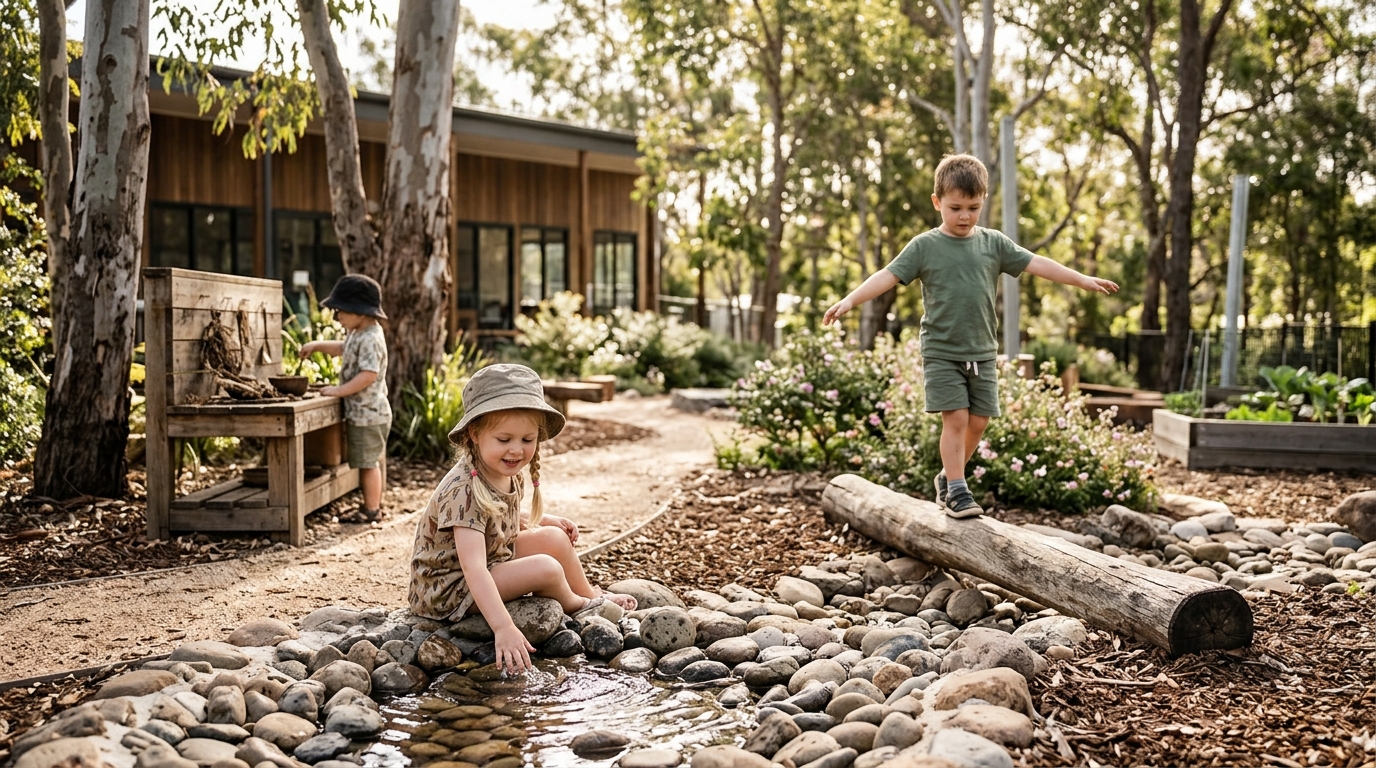
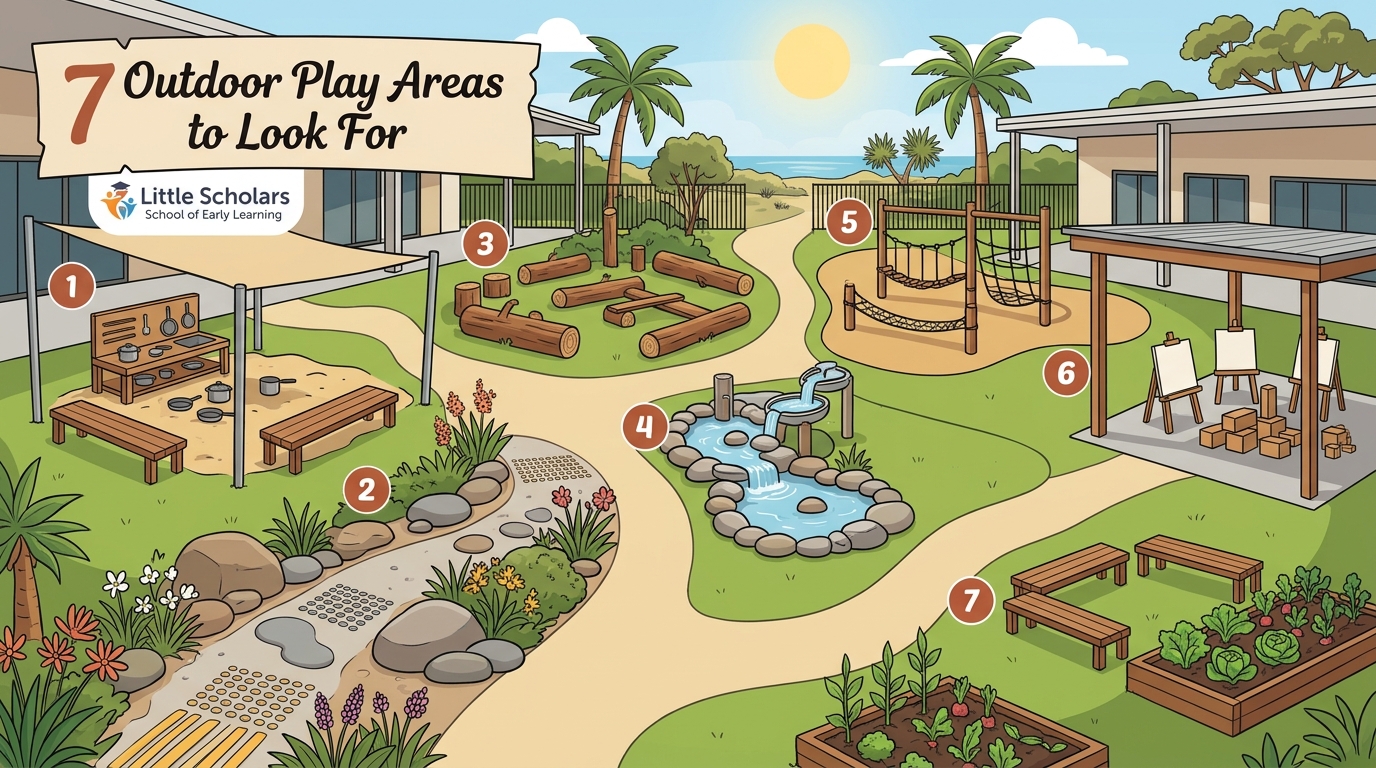
7 Outdoor Play Areas to Look For in Childcare Centres Near Redland Bay
Choosing a childcare centre near Redland Bay involves more than checking opening hours or fees. The outdoor environment is a critical component of early childhood education, serving as a space for physical development, sensory exploration, and social interaction. Little Scholars School of Early Learning, a family-owned provider with two campuses in Redland Bay, designs its outdoor spaces to support holistic learning through nature-based play. This guide outlines the specific outdoor features that distinguish high-quality early learning environments in the Redlands region.
1. Natural Surface Playgrounds
Grass and natural terrain support gross motor skills and sensory grounding. Many modern early learning centres are moving away from purely synthetic rubber surfaces to incorporate real grass, sand, and natural terrain. These surfaces provide varied textures that help children develop balance and coordination. At Little Scholars Redland Bay, the playgrounds are designed with natural elements that allow children to play on real grass, fostering a deeper connection to the environment.
2. Age-Specific Play Zones
Segregated areas ensure safety and age-appropriate challenges for different developmental stages. A well-designed outdoor space is not a single open field but a collection of distinct zones tailored to specific age groups. For example, the Redland Bay South campus features a professionally designed playground tailored to specific age groups, including a large play fort. This segmentation allows infants to explore safely while older children engage in more complex physical activities.
3. Interactive Gardens and Worm Farms
Hands-on gardening teaches life cycles, nutrition, and environmental stewardship. Outdoor learning extends beyond play equipment to include interactive gardens where children can dig, plant, and harvest. Little Scholars Redland Bay offers a garden where children learn about life cycles, where food comes from, and composting through a working worm farm. These spaces turn the outdoors into a living classroom for scientific inquiry.
4. Water Play Features
Water play enhances sensory development and introduces basic physics concepts. Water is a powerful tool for early learning, offering opportunities for pouring, splashing, and experimenting with volume and flow. The Redland Bay campus includes dedicated water play areas that invite children to explore these concepts through direct manipulation. Such features are essential for engaging children who learn best through tactile and sensory experiences.
5. Cubby Houses and Play Forts
Enclosed structures provide a sense of security and a space for dramatic play. Cubby houses and large play forts serve as crucial retreats for children to regulate their emotions and engage in imaginative scenarios. The Redland Bay South campus is noted for having one of the largest childcare forts in Brisbane, providing ample space for group play and storytelling. These structures encourage social negotiation and cooperative play among peers.
6. Nature Walks and Rainforest Trails
Access to natural landscapes encourages exploration and curiosity about the local ecosystem. Centres located in leafy suburbs often integrate their surroundings into the curriculum through nature walks. Little Scholars campuses, such as those in the Gold Coast and Redlands, incorporate rainforest walks and mature trees into their outdoor design. This allows children to observe local flora and fauna, fostering a sense of wonder and respect for nature.
7. Open-Ended Verandahs and Transitional Spaces
Flexible indoor-outdoor boundaries allow for a seamless flow of learning activities. High-quality centres design their outdoor spaces to connect fluidly with indoor studios. The Redland Bay South campus features a spacious veranda with open-ended space that allows for a flexible indoor/outdoor program. This design ensures that learning is not confined to walls, allowing educators to extend activities based on the weather and the children's interests. according to Outdoor Learning Environments
Choosing the Right Outdoor Environment
When evaluating childcare centres near Redland Bay, prioritize facilities that offer a variety of textures, age-appropriate zones, and access to nature. Look for spaces that are not just for play, but for learning, where children can engage with the environment in meaningful ways. Little Scholars Redland Bay and Redland Bay South campuses provide these diverse outdoor experiences, ensuring that every child has the opportunity to explore and grow in a safe, nurturing setting.
Frequently Asked Questions
What is the difference between a natural playground and a synthetic one?
A natural playground uses materials like grass, wood, and sand, while a synthetic playground uses rubber or plastic. Natural surfaces provide varied sensory experiences and are often more sustainable, whereas synthetic surfaces are easier to clean and maintain.
Why are water play areas important for early childhood development?
Water play areas help children develop fine motor skills, understand cause and effect, and explore basic physics concepts like volume and flow. They also provide a calming sensory experience for many young children.
How do childcare centres ensure safety in outdoor play areas?
Centres ensure safety through regular maintenance, age-appropriate equipment, and supervision by qualified educators. They also design spaces with soft surfaces and clear boundaries to minimize the risk of injury.
Can children with different abilities use the same outdoor play areas?
Yes, inclusive design allows children with different abilities to use the same spaces. Features like ramps, varied heights, and sensory-rich elements ensure that all children can participate and benefit from outdoor play.
How often do childcare centres update their outdoor play equipment?
Centres regularly inspect and update their outdoor equipment to ensure it remains safe and engaging. The frequency of updates depends on wear and tear, but most centres aim to refresh their spaces every few years to keep them interesting for children.