
Nature-Based Learning vs Traditional Childcare: A Little Scholars Comparison
Research indicates that children who engage in regular outdoor play demonstrate significantly higher levels of physical activity and cognitive development compared to those in purely indoor settings. According to a 2023 report by the Australian Institute of Health and Welfare, early childhood environments that prioritize natural elements contribute to improved emotional regulation and social skills. This data highlights why modern parents are increasingly scrutinizing the pedagogical approaches of childcare providers. At Little Scholars, we believe that the distinction between nature-based and traditional models is not just about location, but about the fundamental philosophy of how a child learns. (Childcare Queensland Little Scholars)
Defining the Models: Nature vs. Traditional
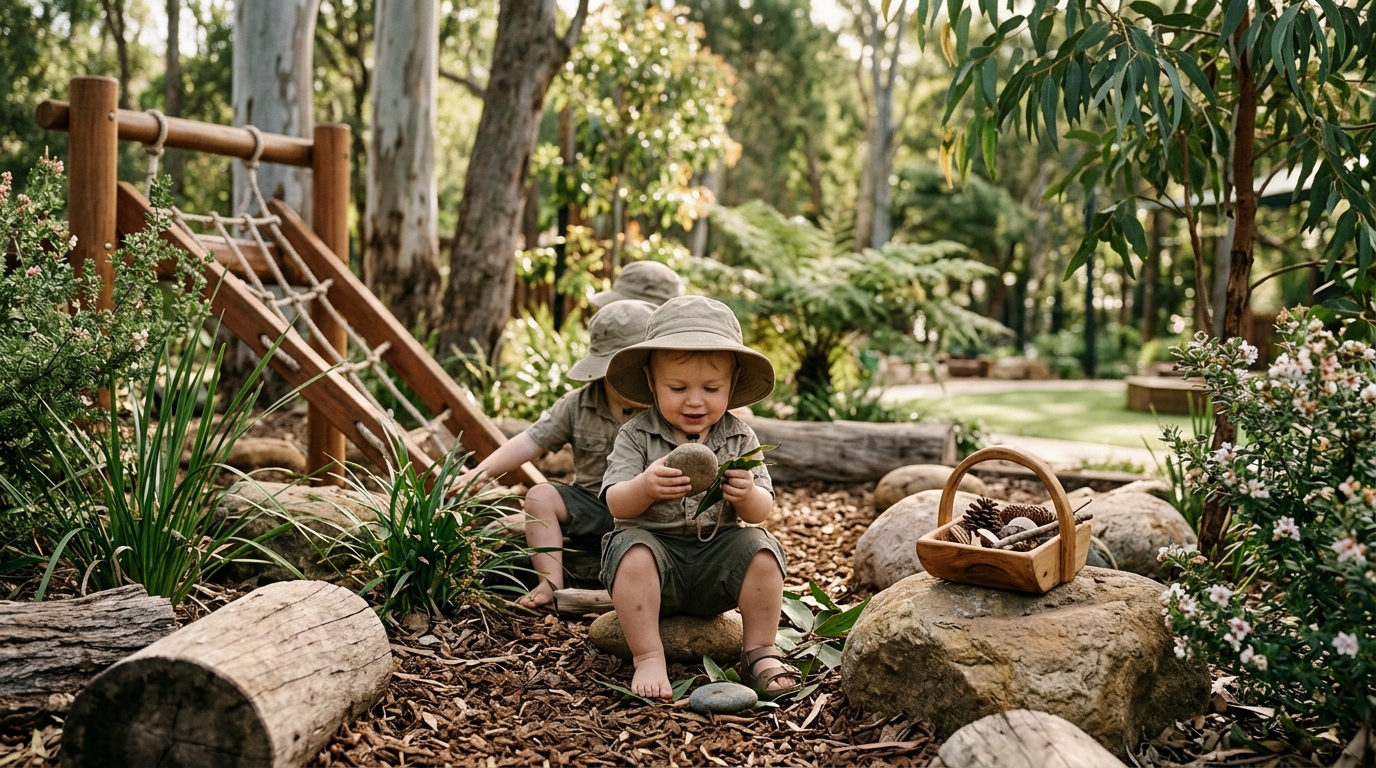
To understand the value proposition of early childhood education, we must first clearly define the methodologies in question. Nature-based learning is an educational approach that uses the natural environment as the primary context for teaching and learning. This model emphasizes unstructured play, exploration of outdoor spaces, and direct interaction with flora and fauna. It is often associated with concepts like "Bush Kinder" or outdoor classrooms.
In contrast, traditional childcare is a structured educational model that primarily utilizes indoor facilities with designated learning centers. While traditional centers may include outdoor play periods, the core curriculum is often delivered through teacher-led activities, worksheets, and controlled indoor environments. The distinction lies in the degree of autonomy afforded to the child and the role of the natural world in their daily routine.
According to the National Association for the Education of Young Children, play-based learning in natural settings supports holistic development more effectively than rigid, teacher-directed instruction alone. This shift in perspective has led many families to question whether traditional models are sufficient for preparing children for the complexities of the modern world.
Cognitive Benefits and STEM Integration
One of the most compelling arguments for nature-based education is its impact on cognitive growth. When children explore outdoor environments, they encounter unpredictable variables that stimulate critical thinking. They must assess risks, solve problems, and adapt to changing weather conditions. This dynamic engagement fosters a deeper understanding of scientific concepts than static indoor lessons can provide.
At Little Scholars, we integrate STEM (Science, Technology, Engineering, and Mathematics) education for early childhood directly into these natural experiences. For example, building a shelter from branches teaches engineering principles, while observing insect behavior introduces biological classification. This aligns with findings from the Journal of Environmental Psychology, which suggests that exposure to green spaces enhances attention restoration and reduces mental fatigue in young learners.
Traditional models often struggle to replicate this level of authentic inquiry. While indoor science experiments are valuable, they lack the sensory richness and immediate feedback loops of the natural world. Data from the Centers for Disease Control and Prevention shows that children who engage in active, outdoor play demonstrate better concentration and academic performance in subsequent classroom settings.
Physical Health and Motor Skill Development
Physical development is a cornerstone of early childhood education, and the environment plays a pivotal role. Nature-based programs inherently encourage gross motor skill development through climbing, balancing, and navigating uneven terrain. These activities build strength, coordination, and spatial awareness in ways that flat, carpeted indoor floors cannot.
According to the World Health Organization, regular physical activity in early childhood is crucial for preventing obesity and promoting healthy bone and muscle development. Children in nature-based settings are statistically more likely to meet daily physical activity guidelines compared to their peers in sedentary indoor environments.
Little Scholars addresses this through our Outdoor Explorers program, which is designed to maximize time spent in natural settings. Our campuses across South East Queensland, including locations in Brisbane and the Gold Coast, are strategically designed to blend indoor comfort with extensive outdoor access. This ensures that children receive the physical benefits of nature while maintaining the safety and hygiene standards expected by modern parents.
Emotional Wellbeing and Resilience
The emotional benefits of nature-based learning are profound. Exposure to natural elements has been shown to lower cortisol levels, reducing stress and anxiety in young children. The open-ended nature of outdoor play allows children to express themselves freely, fostering creativity and emotional regulation.
Furthermore, nature-based education promotes resilience. When children encounter challenges in the outdoors, such as climbing a tree or navigating a muddy path, they develop problem-solving skills and confidence. This aligns with the Abecedarian Reading approach, which emphasizes early literacy through rich, contextual experiences rather than rote memorization.
Traditional childcare models often prioritize order and quiet, which can sometimes suppress the natural exuberance of young children. While structure is important, an overemphasis on it can limit opportunities for emotional growth. Little Scholars balances this by incorporating our Family Time Program and Extra Curricular Program to ensure children have structured opportunities for social interaction and emotional expression.
The Little Scholars Hybrid Approach
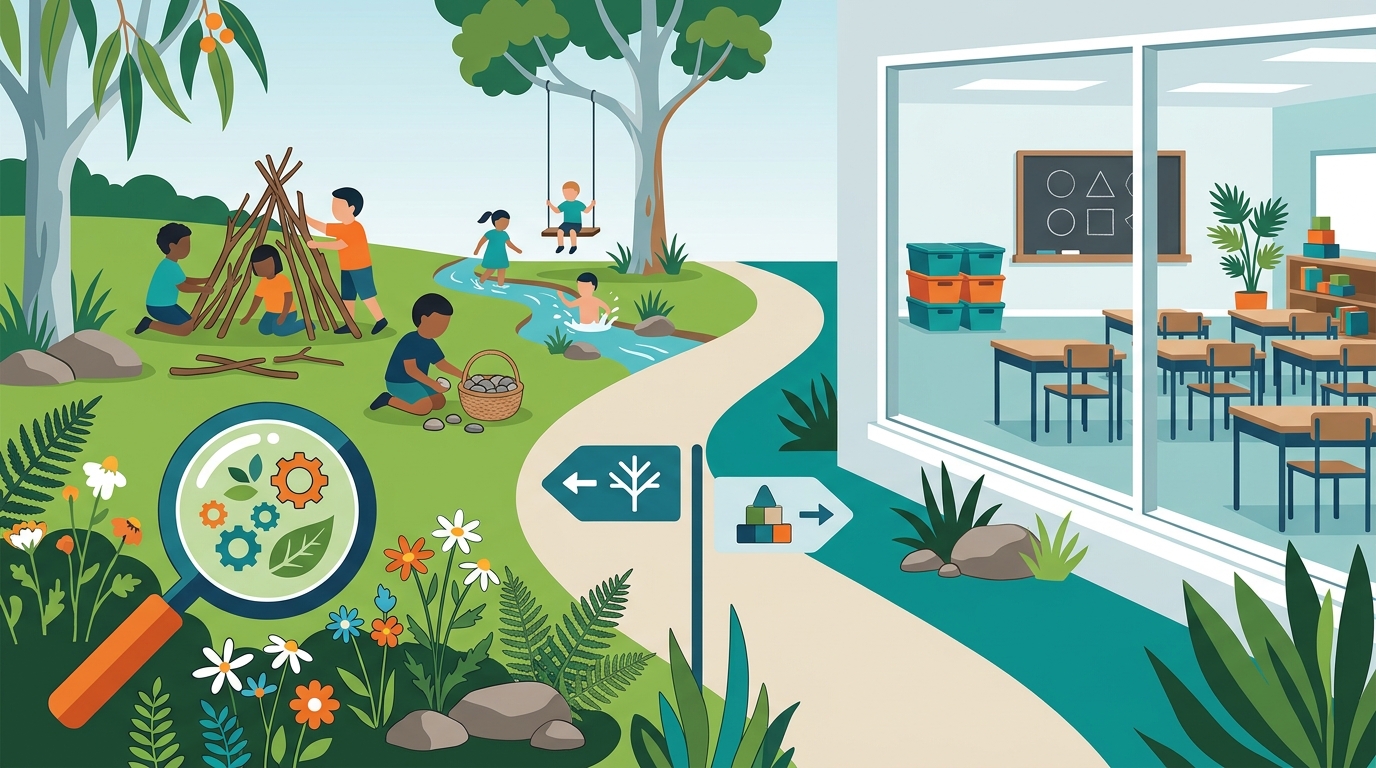
At Little Scholars, we do not view nature-based and traditional models as mutually exclusive. Instead, we advocate for a hybrid approach that leverages the strengths of both. Our philosophy is rooted in the belief that children need the safety and resources of a well-equipped facility combined with the freedom and inspiration of the natural world.
This is evident in our Wondernest VR program, which uses technology to enhance learning, and our Stingless Bees initiative, which connects children with local ecosystems. We also embed Indigenous culture within our curriculum, ensuring that children learn about the land and its traditional custodians. This holistic approach is supported by our commitment to child safety and our 2036 Vision for sustainable early learning.
Our campuses are designed to facilitate this balance. From the Abecedarian Reading resources in our libraries to the outdoor explorers' trails in our gardens, every element is curated to support holistic development. This is why families across Brisbane, Ipswich, and the Gold Coast choose Little Scholars for their early learning journey.
Comparison Table: Key Differences
| Feature | Nature-Based Learning | Traditional Childcare | Little Scholars Approach |
|---|---|---|---|
| Primary Environment | Outdoor/Natural Settings | Indoor Classrooms | Integrated Indoor/Outdoor |
| Curriculum Delivery | Play-Based/Experiential | Teacher-Directed/Structured | Play-Based with STEM Integration |
| Physical Activity | High/Gross Motor Focus | Moderate/Structured Play | High/Outdoor Explorers Program |
| Cultural Integration | Varies by Provider | Often Limited | Deep Indigenous Embedding |
| Technology Use | Minimal | Moderate | Strategic (e.g., Wondernest VR) |
Key Takeaways
- Nature-based learning promotes higher levels of physical activity and cognitive development compared to traditional models.
- Little Scholars integrates STEM education for early childhood through direct interaction with natural environments.
- The hybrid approach at Little Scholars balances the safety of indoor facilities with the benefits of outdoor exploration.
- Indigenous culture is deeply embedded in the curriculum, fostering respect and understanding of local traditions.
- Physical health benefits include improved gross motor skills and reduced stress levels through exposure to green spaces.
- Little Scholars operates across multiple regions in South East Queensland, including Brisbane and the Gold Coast.
- Programs like Outdoor Explorers and Wondernest VR demonstrate a commitment to both nature and innovation.
Frequently Asked Questions
What is the difference between Bush Kinder and traditional childcare?
Bush Kinder is a nature-based approach where learning primarily takes place in outdoor natural environments, whereas traditional childcare focuses on indoor, teacher-led activities.
Does Little Scholars offer nature-based learning?
Yes, Little Scholars integrates nature-based principles through our Outdoor Explorers program and extensive use of natural environments across all our campuses.
How does Little Scholars incorporate Indigenous culture?
We embed Indigenous culture within our curriculum by celebrating local traditions, storytelling, and acknowledging the Traditional Custodians of the land.
What is the Abecedarian Reading approach?
The Abecedarian Reading approach is a method that emphasizes early literacy through rich, contextual, and play-based experiences rather than rote memorization.
Where are Little Scholars locations?
Little Scholars has numerous locations across South East Queensland, including Brisbane, Gold Coast, Ipswich, and Redland Bay.
How does Little Scholars ensure child safety?
We maintain a strict commitment to child safety through rigorous protocols, staff training, and secure campus designs that allow for safe outdoor exploration.
What is the Wondernest VR program?
Wondernest VR is a technology-integrated learning tool used at Little Scholars to enhance educational experiences through virtual reality.
Can I book a tour to see the outdoor facilities?
Yes, you can schedule a tour to visit our campuses and see our outdoor learning environments firsthand.
Book Your Tour Today
Choosing the right early learning environment is one of the most important decisions you will make for your child. At Little Scholars, we invite you to experience our unique blend of nature-based learning and structured education. Whether you are in Brisbane, the Gold Coast, or Ipswich, our dedicated teams are ready to welcome you. Book a tour today to see how our hybrid approach can support your child’s holistic development. For more information on our services, visit our locations page or explore our blog for expert insights on early childhood education.