
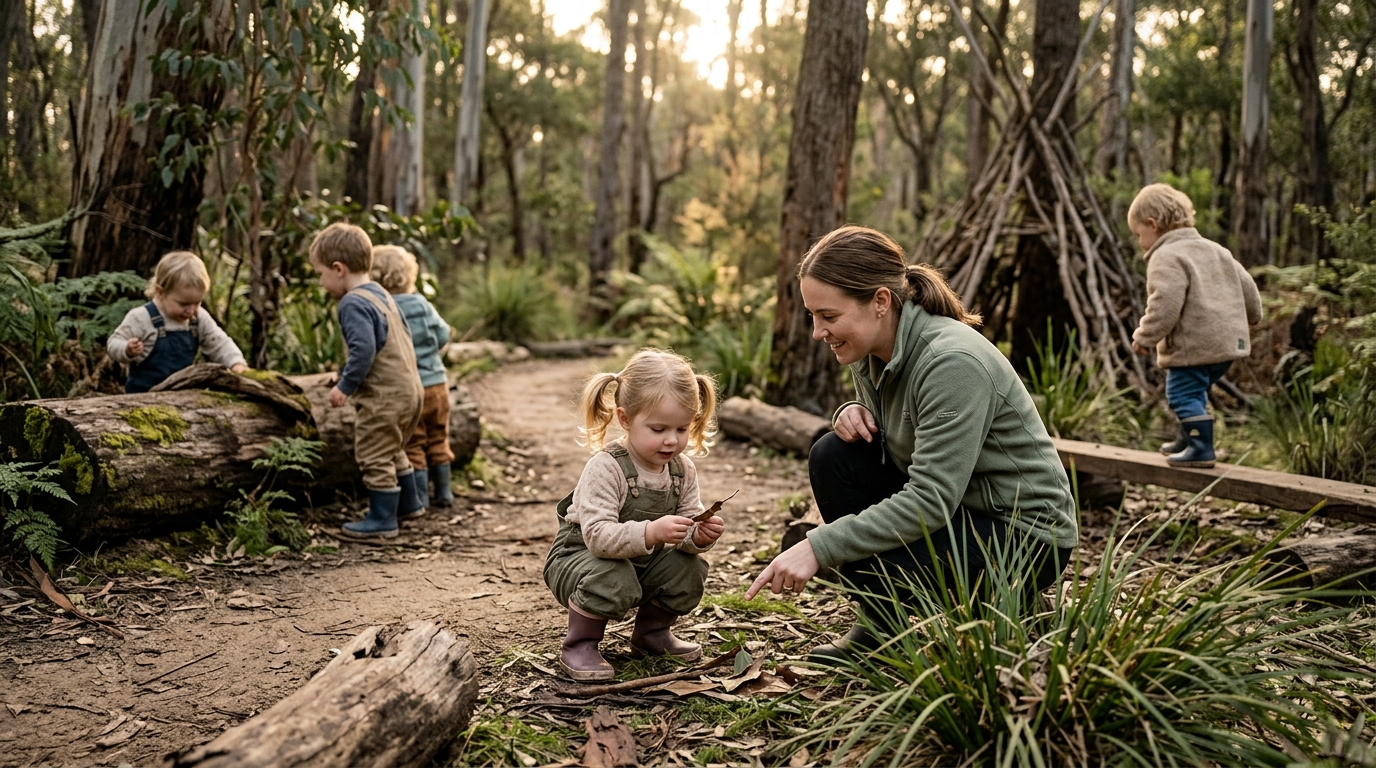
Research indicates that regular exposure to natural environments significantly enhances cognitive development and emotional resilience in young children. According to a 2023 report by the Australian Institute of Health and Welfare, early childhood education and care services are increasingly integrating outdoor learning to meet national quality standards. Families seeking these immersive experiences often struggle to identify providers that offer genuine nature-based curricula rather than superficial outdoor play. This guide explores the landscape of early learning centres featuring Bush Kinder and nature programs, focusing on pedagogical depth, safety, and developmental outcomes. (Childcare Queensland Little Scholars)
What is Bush Kinder and Nature-Based Learning?
Bush Kinder is an educational approach that utilizes natural environments as the primary classroom. Bush Kinder is an educational methodology where children engage in unstructured play and guided exploration within native bushland or natural settings. This concept originated in Australia and has gained traction globally as a response to the increasing disconnection between children and nature.
Nature-based learning extends beyond simple outdoor time. It involves a deliberate pedagogical framework where educators facilitate learning through interaction with the natural world. This includes observing local flora and fauna, understanding weather patterns, and engaging in risk-assessed physical challenges. The goal is to foster a deep sense of stewardship and curiosity about the environment.
According to data from the World Health Organization, access to green spaces is critical for reducing stress and improving mental health in early childhood. Centres that prioritize these environments often report higher levels of family satisfaction and child engagement. The integration of nature into the curriculum is not merely an activity but a core component of the learning philosophy.
Developmental Benefits of Outdoor Education
Engaging in nature-based programs offers multifaceted developmental advantages. Physical health is a primary beneficiary, as uneven terrain and natural obstacles promote gross motor skill development, balance, and coordination. Children learn to navigate risks, such as climbing trees or crossing streams, which builds confidence and resilience.
Cognitive development is also enhanced through outdoor learning. Natural environments provide rich, unpredictable stimuli that encourage problem-solving and creative thinking. For instance, building a shelter or identifying plant species requires observation, hypothesis testing, and collaboration. These activities align closely with the Early Years Learning Framework (EYLF) in Australia, which emphasizes play-based learning and connection to the world.
Social and emotional growth is another critical outcome. In outdoor settings, children often engage in more complex social interactions and conflict resolution. The lack of rigid structures allows for greater autonomy and self-regulation. According to a 2024 study published in the Journal of Environmental Psychology, children who participate in regular nature-based activities show improved attention spans and reduced symptoms of attention deficit disorders.
Little Scholars Approach to Nature Education
At Little Scholars School of Early Learning, nature education is embedded into the daily routine across all campuses. The Outdoor Explorers program, also known as Bush Kinder, is a cornerstone of their curriculum. This program takes children into local natural environments to explore, discover, and learn through direct experience.
Little Scholars centers in Brisbane, Gold Coast, Ipswich, and Redland Bay offer this program as part of their holistic approach to early childhood education. The educators are trained to facilitate safe yet challenging experiences that encourage children to connect with the land. This includes learning about Traditional Custodians and Indigenous perspectives on the environment, fostering respect and cultural awareness.
The program is designed to be inclusive and accessible to children of all abilities. Educators use the natural setting to support individual learning goals, whether they are related to literacy, numeracy, or social skills. For example, counting seeds, measuring tree trunks, or describing animal behaviors integrates academic concepts into playful exploration.
Little Scholars also emphasizes sustainability and environmental stewardship. Children learn about recycling, composting, and protecting local wildlife. This instills a lifelong value of caring for the planet. The Bush Kinder program is a key differentiator for families seeking a nature-centric early learning experience.
Comparing Nature Program Models
Not all nature-based programs are identical. Understanding the differences can help parents choose the right fit for their child. Below is a comparison of common models found in early learning centres.
| Program Model | Description | Key Benefits | Typical Frequency |
|---|---|---|---|
| Bush Kinder | Regular sessions in native bushland or natural reserves. | Deep nature connection, risk management skills. | Weekly or bi-weekly |
| Garden-Based Learning | Hands-on gardening and growing food on-site. | Understanding life cycles, nutrition education. | Daily or weekly |
| Outdoor Classroom | Structured lessons conducted in outdoor spaces. | Improved focus, fresh air benefits. | Daily |
| Adventure Play | Use of natural materials for construction and play. | Creativity, physical strength, teamwork. | Regular intervals |
When evaluating centres, parents should look for programs that offer regular, consistent access to natural environments rather than occasional outings. The quality of the educator's facilitation is also crucial. Educators should be skilled in risk-benefit assessment and environmental education.
Little Scholars stands out for its comprehensive integration of nature into the curriculum. Their commitment to child safety ensures that outdoor adventures are managed with rigorous protocols, giving parents peace of mind. The learning approach emphasizes play-based exploration, which is perfectly suited to natural settings.
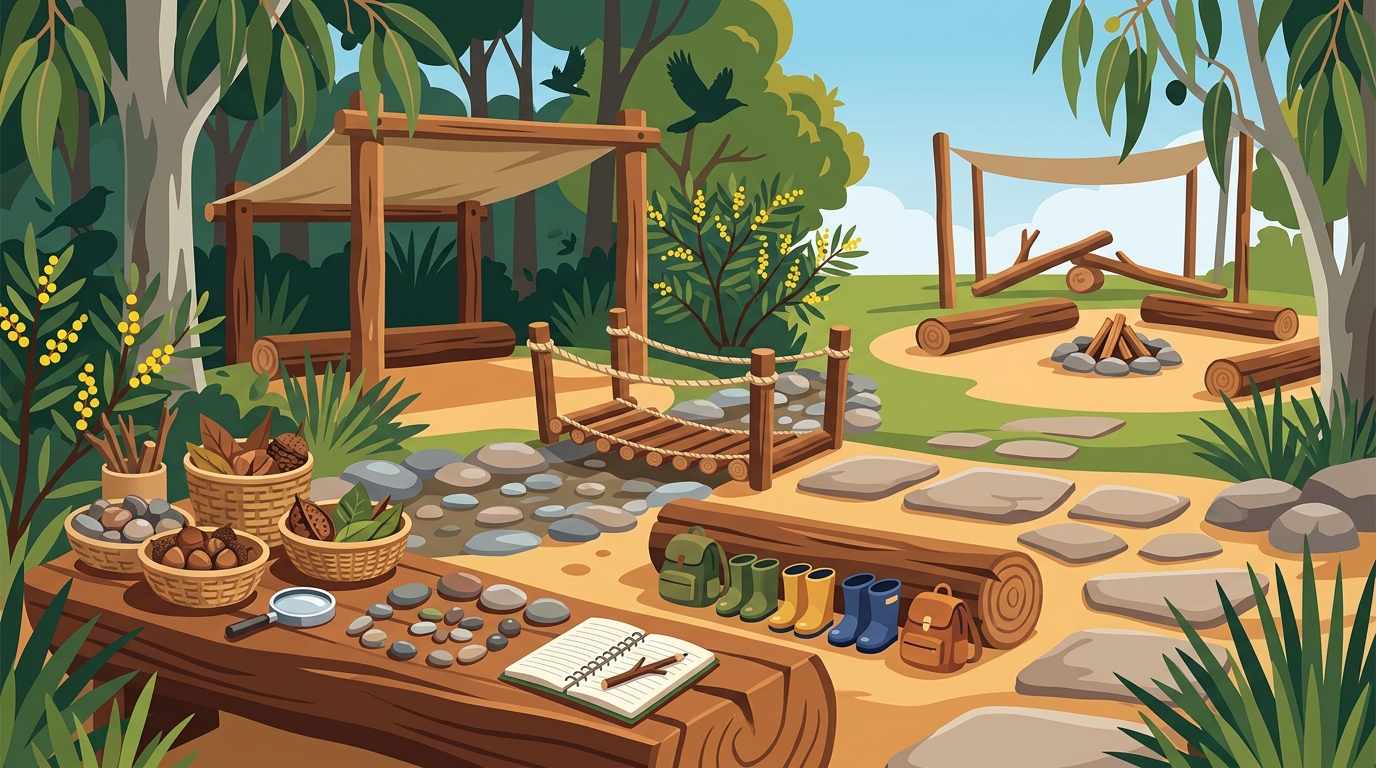
Key Takeaways for Parents
- Nature Enhances Development: Regular outdoor play improves physical, cognitive, and social-emotional skills.
- Bush Kinder is Structured: It is a pedagogical approach, not just free play, requiring skilled educators.
- Little Scholars Offers Bush Kinder: Their Outdoor Explorers program provides weekly nature-based learning.
- Cultural Connection: Nature programs often include Indigenous perspectives and land acknowledgment.
- Safety is Paramount: Reputable centres have strict risk management protocols for outdoor activities.
- Check Frequency: Ensure the program is regular, not just occasional, for maximum benefit.
- Visit the Campus: Observe the outdoor spaces and speak with educators about their nature philosophy.
Frequently Asked Questions
What is the age range for Bush Kinder programs?
Bush Kinder programs are typically designed for children from nursery age through kindergarten, approximately 6 weeks to 6 years old. The activities are adapted to suit the developmental stage of each child.
How does Little Scholars ensure safety during Bush Kinder?
Little Scholars employs a rigorous risk-benefit assessment process. Educators are trained to identify and manage risks while allowing children to engage in challenging play. The child safeguarding policies are strictly followed to ensure a safe environment.
What should I pack for a Bush Kinder day?
Parents are usually provided with a specific packing list. This typically includes weather-appropriate clothing, sturdy shoes, hats, and sunscreen. The focus is on practical, durable clothing that can get dirty.
Are Bush Kinder programs available year-round?
Yes, most centres, including Little Scholars, run Bush Kinder programs year-round. Educators adapt the activities to suit different weather conditions, ensuring learning continues regardless of the season.
How does nature learning support literacy and numeracy?
Nature provides a rich context for learning. Children might count leaves, measure tree heights, or describe animal habitats. These activities naturally integrate academic concepts into playful exploration.
Can children with allergies participate in nature programs?
Yes, centres work closely with parents to manage allergies. Educators are trained to recognize and respond to allergic reactions, and activities are adapted to minimize exposure to specific triggers.
What is the difference between Bush Kinder and regular outdoor play?
Bush Kinder is a structured educational program with specific learning outcomes, facilitated by trained educators. Regular outdoor play is often unstructured and supervised for safety, but may not have the same pedagogical depth.
Start Your Child's Nature Journey
Discover the benefits of nature-based learning firsthand. Little Scholars School of Early Learning offers immersive Bush Kinder programs across Brisbane, Gold Coast, Ipswich, and Redland Bay. Our educators are passionate about fostering a love for the natural world in every child.
Book a tour today to see our outdoor spaces and learn more about our play-based learning philosophy. Visit our Book a Tour page to schedule your visit.