
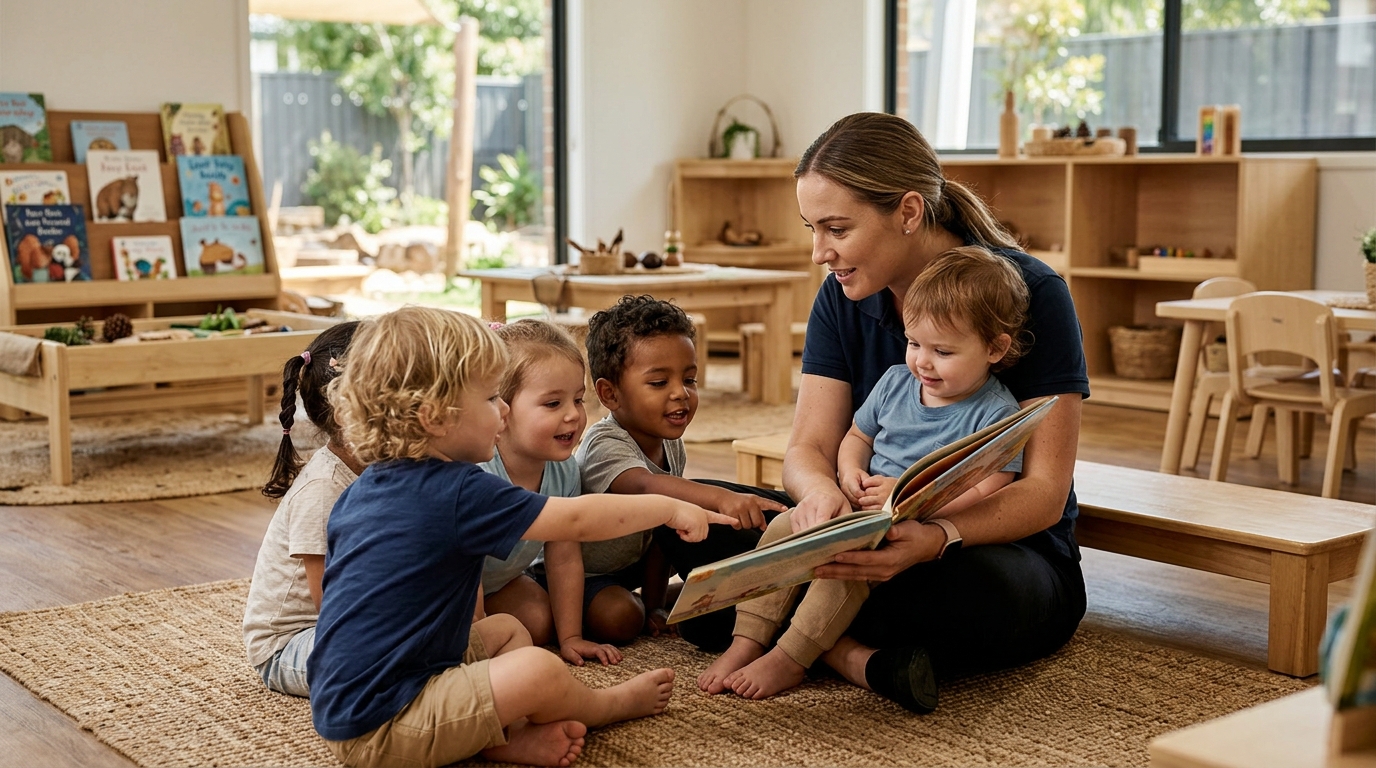
Early childhood education is the critical foundation for all future academic success. Research indicates that the first five years of a child's life are the most rapid period for brain development, establishing neural pathways for communication, reasoning, and emotional regulation. At Little Scholars School of Early Learning, we recognize that literacy is not merely about reading books; it is a holistic process involving listening, speaking, viewing, and creating. Our daily programs are meticulously designed to immerse children in rich language environments, ensuring they develop the confidence and skills necessary to become lifelong learners. This guide details how our specific pedagogical frameworks, including the Abecedarian Approach and STEM-integrated play, support early literacy and language acquisition across all age groups. (Childcare Queensland Little Scholars)
The Abecedarian Approach to Early Reading
At the core of our literacy strategy is the Abecedarian Approach, a research-based method that prioritizes early language intervention. This approach is not a traditional phonics program but rather a comprehensive framework that integrates language development into every moment of the day. The Abecedarian Approach is defined as a high-quality early childhood intervention that emphasizes continuous, responsive interaction between educators and children to build foundational language skills. (Bush Kinder Program Queensland)
Our educators are trained to engage in "serve and return" interactions. This means that when a child vocalizes, points, or gestures, the educator responds with meaningful language, expanding on the child's intent. For example, if a child points to a bird, the educator might say, "Yes, that is a blue bird flying high in the sky." This technique, known as scaffolding, helps children connect words to objects and actions, significantly accelerating their vocabulary growth. According to longitudinal studies on early intervention, children who receive high-quality language support in the first three years demonstrate superior reading comprehension and social skills in later schooling years. (Parent Involvement Childcare QLD)
We implement this approach through several key mechanisms:
- Responsive Caregiving: Diapering, feeding, and washing hands are treated as prime opportunities for one-on-one language exchange.
- Rich Environmental Print: Our classrooms are filled with labeled objects, books, and visual aids that expose children to print awareness.
- Dialogic Reading: Educators use open-ended questions during storytime to encourage children to predict outcomes and describe illustrations.
Daily Routines That Build Vocabulary
Literacy development at Little Scholars is woven into the fabric of our daily schedules. We do not isolate language learning to specific "lesson times." Instead, we utilize routine moments to reinforce vocabulary and narrative skills. The concept of narrative competence is central to our philosophy. Narrative competence is the ability to construct and understand stories, which is essential for organizing thoughts and communicating complex ideas.
Our educators document these moments through learning stories and digital portfolios, which are shared with families. This creates a continuous feedback loop between the center and the home. When families see the specific words and phrases their child is using, they can reinforce this language at home. This partnership is crucial because children who are read to regularly at home and in childcare settings show a 40% higher rate of early literacy readiness compared to those who do not receive consistent exposure.
Key daily activities include:
- Morning Circle: A structured time for singing, rhyming, and discussing the day's plan. This builds auditory processing and turn-taking skills.
- Snack Time Conversations: Educators model descriptive language by discussing textures, tastes, and the origins of food.
- Outdoor Explorers: During our Bush Kinder sessions, children engage in natural inquiry, using language to negotiate roles and describe their discoveries in the environment.
STEM Education and Language Development
Many parents assume that STEM (Science, Technology, Engineering, and Mathematics) is separate from literacy. However, at Little Scholars, we view STEM as a powerful vehicle for language development. STEM Education for Early Childhood is defined as the integration of scientific inquiry and mathematical thinking into play-based activities to foster problem-solving and descriptive language.
When children engage in STEM activities, they must use precise language to describe their observations. For instance, during a block-building challenge, a child might say, "The tower fell because the base was too narrow." This sentence demonstrates an understanding of cause and effect, spatial relationships, and comparative adjectives. Our educators facilitate this by asking probing questions such as, "What do you think will happen if we add another block?" or "How can we make it stand taller?"
We also incorporate digital technologies thoughtfully. Our Wondernest VR program allows children to explore virtual environments, which sparks curiosity and prompts questions. The subsequent discussions about what they saw and felt help them develop abstract thinking and the ability to articulate experiences that are not physically present in the room. This ability to discuss the imaginary or the distant is a critical milestone in language development.
Indigenous Language and Cultural Inclusion
As an Australian early learning provider, we have a profound responsibility to embed Indigenous culture and language into our literacy programs. Our Acknowledgement to Country is not just a formality; it is a pedagogical commitment. We strive to ensure our campuses are inclusive and welcoming, and our partnerships within our communities are invited to become part of our learning programs.
Educators explore and foster storytelling, music, and creativity to engage children’s understanding of culture through our programs. We introduce children to First Nations languages, songs, and stories relevant to the local Traditional Custodians of the land. This exposure broadens children's linguistic horizons and teaches them to respect diverse ways of communicating and knowing.
For example, we might learn songs in the local Indigenous language that describe the seasons or local wildlife. This not only builds vocabulary but also connects children to the history and identity of the place they live. By integrating these cultural narratives, we help children develop a sense of belonging and identity, which is closely linked to confidence in their own voice and expression.
Play-Based Learning for Complex Syntax
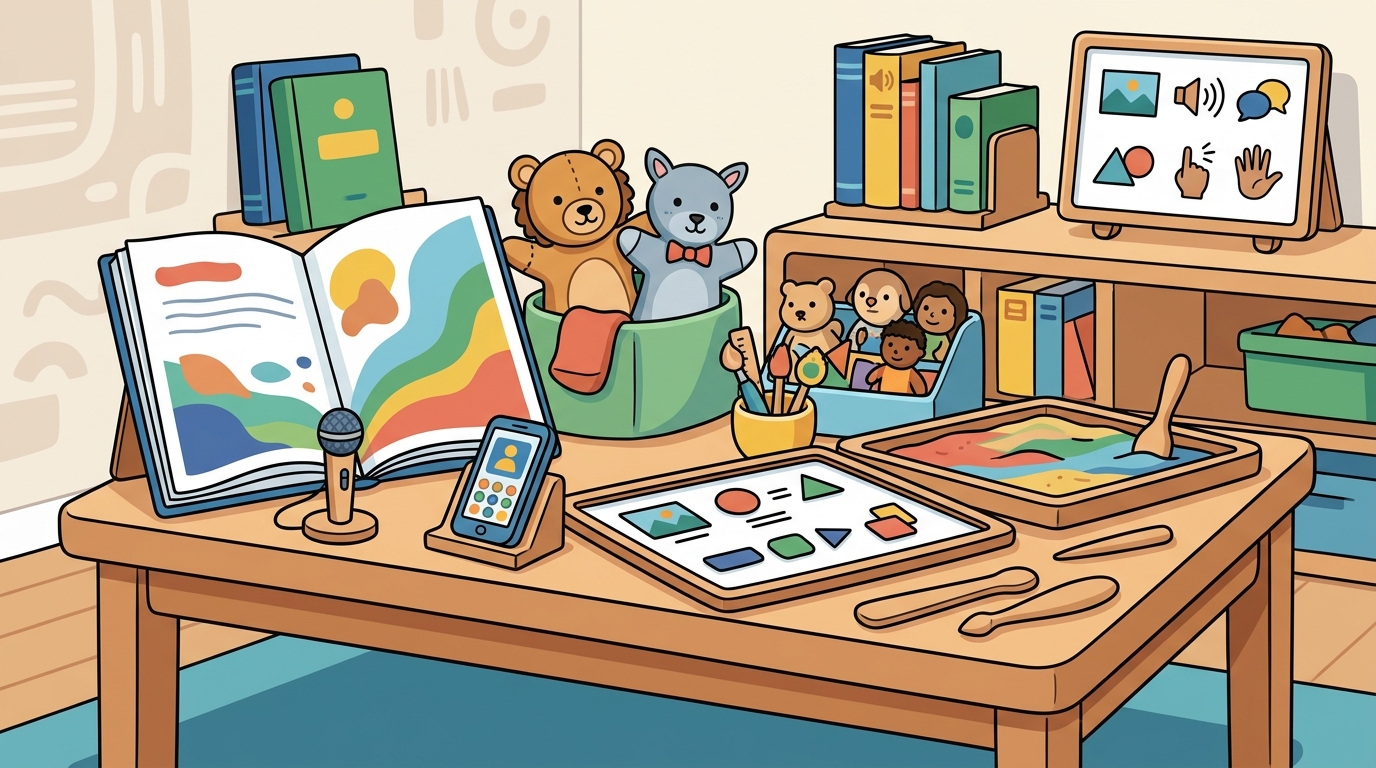
Play is the primary engine of language acquisition in early childhood. Play Based Learning at Little Scholars is defined as a pedagogical approach where children's interests and choices drive the learning process, allowing for natural and spontaneous language use. When children are engaged in dramatic play, such as running a shop or a hospital, they must negotiate roles, assign tasks, and resolve conflicts. This requires complex syntax and advanced vocabulary.
Our educators act as facilitators in this play, subtly introducing new words and concepts. If a child is playing with dinosaurs, the educator might introduce terms like "prehistoric," "extinct," or "fossil." This contextual learning is far more effective than rote memorization because the child understands the meaning of the word through its application.
We also emphasize the importance of outdoor play in language development. The unstructured nature of outdoor environments encourages children to use language to plan, invent, and collaborate. Whether they are building a fort or exploring a creek, the need to communicate their intentions and observations drives linguistic growth.
Program Comparison by Age Group
While our commitment to literacy is universal, the methods and expectations vary by age. The table below outlines how our daily programs support early literacy and language development across different stages.
| Age Group | Primary Literacy Focus | Key Activities & Methods | Language Outcome |
|---|---|---|---|
| Nursery & Infant Care (6 weeks - 15 months) | Pre-linguistic skills, turn-taking, and sound recognition. | Responsive caregiving, singing, board books, and sensory play. | Understanding of basic commands and recognition of familiar words. |
| Toddler Programs (15 months - 2 years) | Vocabulary expansion and simple sentence formation. | Dialogic reading, labeling objects, and simple rhyming games. | Use of two-to-three word phrases and increased verbal requests. |
| Junior & Senior Kindy (2 - 4 years) | Complex syntax, narrative structure, and phonological awareness. | STEM projects, dramatic play, and Abecedarian Approach interventions. | Ability to tell stories, ask questions, and engage in peer negotiation. |
| Kindergarten (4 - 5 years) | Print awareness, early decoding, and formal writing concepts. | Book Week events, Science Fair presentations, and writing centers. | Recognition of letters, understanding of story sequence, and expressive writing. |
Key Takeaways
- Abecedarian Approach: We use this research-based method to integrate language learning into every daily interaction, not just formal lessons.
- STEM Integration: Our STEM Education for Early Childhood programs use inquiry-based learning to build descriptive and analytical vocabulary.
- Cultural Inclusion: We embed Indigenous languages and stories into our curriculum to foster respect and linguistic diversity.
- Play-Based Pedagogy: Dramatic and outdoor play are used to encourage complex syntax and collaborative communication.
- Family Partnership: We share daily learning stories with families to reinforce language development at home.
- Age-Appropriate Goals: Our literacy goals evolve from pre-linguistic skills in infancy to early decoding in kindergarten.
- Environmental Print: Our classrooms are designed with rich visual aids and labels to promote print awareness.
Frequently Asked Questions
How does Little Scholars support children who are still learning English?
Our educators are trained in second language acquisition strategies. We use visual aids, gestures, and simplified language to support non-native speakers. We also encourage families to maintain their home language, as bilingualism enhances cognitive flexibility and literacy skills.
What is the Abecedarian Approach and how is it used?
The Abecedarian Approach is a high-quality early childhood intervention that emphasizes continuous, responsive interaction between educators and children to build foundational language skills. We use it by engaging in "serve and return" conversations during all daily activities.
Do you teach phonics in the kindergarten program?
We introduce phonological awareness through songs, rhymes, and sound games. While we do not use rigid phonics drills, we help children recognize letter sounds and their relationship to words through play-based activities and environmental print.
How are parents involved in their child's literacy journey?
Parents are involved through regular updates via our digital portfolio system, which includes learning stories and photos of literacy activities. We also host family workshops and events, such as Book Week, to encourage reading at home.
What role does outdoor play play in language development?
Outdoor play provides unstructured opportunities for children to use language to plan, negotiate, and describe their experiences. Our Bush Kinder program specifically leverages the natural environment to spark curiosity and descriptive language.
How do you incorporate Indigenous culture into literacy programs?
We integrate local Indigenous languages, songs, and stories into our daily routines. This helps children understand the history of the land and respect diverse cultural narratives, fostering a sense of belonging and identity.
What is the difference between Junior and Senior Kindy literacy goals?
Junior Kindy focuses on narrative structure and complex sentence formation through dramatic play. Senior Kindy shifts towards print awareness, early decoding, and the mechanics of writing, preparing children for formal schooling.
Schedule Your Campus Tour
Understanding the daily programs that support early literacy and language development is just the first step. The best way to see our Abecedarian Approach and STEM-integrated learning in action is to visit one of our campuses. Whether you are in Brisbane, the Gold Coast, Ipswich, or Redland Bay, our educators are ready to discuss how we can support your child's unique journey.
We invite you to book a tour today. Experience the difference that a values-driven, education-focused approach can make for your family. You can also find your campus to view our specific locations and availability. For more insights on our teaching philosophy, please visit our Our Approach page.