
Essential Standards and Features for Evaluating Gold Coast Bush Kinder Programs
Choosing the right early childhood environment is one of the most significant decisions a family makes. For parents on the Gold Coast, the allure of outdoor learning is strong, but navigating the quality of these programs requires a clear understanding of industry standards. Recent data indicates that early childhood education providers in Australia are increasingly adopting outdoor pedagogy to enhance child development outcomes. According to the Australian Children's Education & Care Quality Authority (ACECQA), outdoor learning environments are critical for fostering resilience and physical health in young children. This guide outlines the essential standards and features you must evaluate when selecting a Bush Kinder program in the Gold Coast region. (Childcare Queensland Little Scholars)
Understanding Bush Kinder Programs
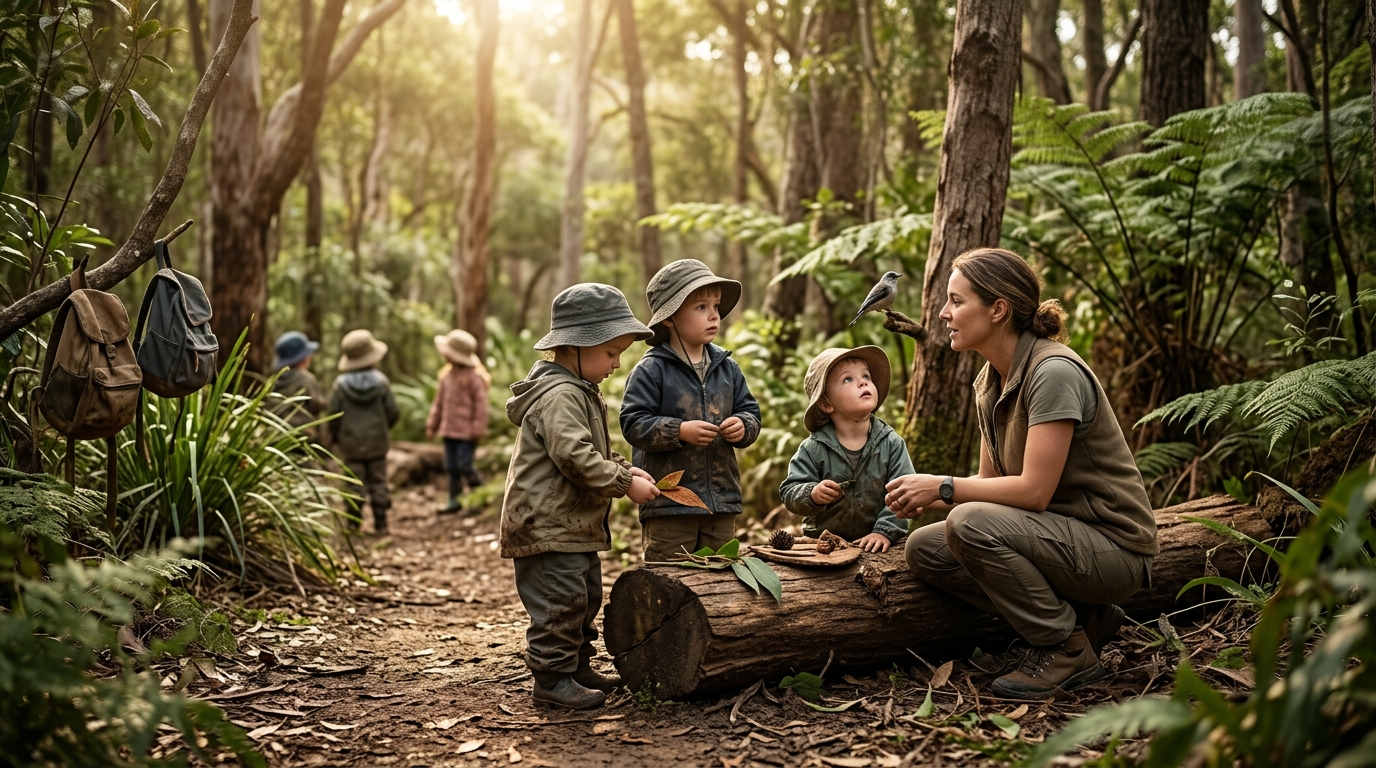
Bush Kinder is an early childhood education model that takes place primarily in natural outdoor environments. It is not merely a playground session but a structured pedagogical approach. Bush Kinder is an educational model that utilizes natural outdoor settings to facilitate play-based learning and holistic child development. This approach draws heavily from Scandinavian forest school concepts, adapted for the Australian context.
On the Gold Coast, this model is particularly relevant due to the region's diverse ecosystems, ranging from coastal rainforests to hinterland gullies. The program encourages children to engage with the natural world directly. This engagement is supported by the National Quality Standard (NQS), which emphasizes the importance of the environment as a "third teacher." Parents must look for programs that explicitly state their commitment to this philosophy rather than treating outdoor time as a secondary activity.
Programs like those offered by Little Scholars integrate these principles into their daily routines. They ensure that the outdoor experience is not just about exposure to nature but about guided exploration. This distinction is vital for parents seeking a structured yet free-flowing educational environment.
Safety and Risk Management Standards
Safety is the primary concern for any parent considering an outdoor program. However, in Bush Kinder, safety is managed through risk-benefit analysis rather than risk elimination. Risk-benefit analysis is a systematic process used by educators to assess potential hazards and determine if the developmental benefits outweigh the risks. This approach teaches children how to identify and manage danger, a crucial life skill.
First Aid and Emergency Protocols
Any reputable program must have robust first aid protocols. Educators should hold current first aid qualifications, including anaphylaxis and asthma management. The Gold Coast's climate, which can shift rapidly from humid to rainy, requires specific weather contingency plans. According to Bureau of Meteorology data, the Gold Coast experiences significant rainfall throughout the year, making weather adaptability a key operational standard.
Child-to-Educator Ratios
Regulatory compliance with the National Law regarding ratios is non-negotiable. In outdoor settings, maintaining visual contact with all children is more challenging than in a classroom. Therefore, programs often require lower ratios than standard indoor care to ensure adequate supervision. Parents should inquire about the specific ratios used during Bush Kinder sessions.

Educational Framework and Pedagogy
The educational value of Bush Kinder lies in its alignment with the Early Years Learning Framework (EYLF). This framework guides educators in planning experiences that support learning outcomes such as identity, community, and communication.
Play-Based Learning
Play is the vehicle for learning in this model. Play-based learning is an educational approach where children learn through exploration, imagination, and interaction with their environment. In a Bush Kinder setting, this might involve building shelters, identifying native plants, or negotiating roles in a make-believe game.
Educators act as facilitators, observing children and stepping in to scaffold learning when necessary. This requires a high level of pedagogical skill. Look for programs that provide regular updates on how outdoor play is translating into specific learning outcomes for your child.
Indigenous Cultural Integration
A critical standard for Australian early childhood programs is the integration of Aboriginal and Torres Strait Islander histories and cultures. Cultural competence is the ability of educators to understand, appreciate, and interact effectively with people from cultures other than their own. On the Gold Coast, this involves acknowledging the Traditional Custodians of the land, such as the Yugambeh and Kombumerri peoples.
Programs should actively embed Indigenous perspectives into their curriculum. This includes learning about local flora and fauna, understanding the significance of Country, and participating in cultural events. Little Scholars emphasizes this integration, ensuring that children develop a deep respect for the land and its First Nations people.
Environmental Features and Sustainability
The physical environment is the core resource of a Bush Kinder program. The quality of the natural space significantly impacts the educational experience.
Diversity of Habitat
Programs should offer access to diverse habitats. A mix of open spaces, dense vegetation, and water features (where safe) provides a richer learning environment. The Gold Coast's unique biodiversity, including local rainforest reserves, offers excellent opportunities for this diversity.
Sustainability Practices
Educators should model sustainable practices. This includes waste reduction, recycling, and respecting wildlife. Programs that incorporate sustainability initiatives teach children to become environmental stewards from a young age. Look for programs that use natural, loose parts for play rather than manufactured plastic equipment.
Staff Qualifications and Ratios
The expertise of the educators is the most critical factor in program quality. All educators must hold relevant early childhood qualifications.
Specialized Training
Beyond standard qualifications, educators should have training in outdoor education, risk management, and first aid. Some programs may offer specialized certifications in forest school pedagogy. This specialized training ensures that educators can confidently manage the unique challenges of outdoor learning.
Continuity of Care
Consistency in staffing is vital for building secure attachments with children. Programs that maintain a core team of educators for each group provide a more stable learning environment. Parents should ask about staff turnover rates and how new educators are onboarded into the Bush Kinder philosophy.
Comparison of Key Program Features
The table below summarizes the essential features to evaluate when comparing Bush Kinder programs on the Gold Coast.
| Feature | High-Quality Standard | Why It Matters |
|---|---|---|
| Educational Framework | Explicit alignment with EYLF | Ensures learning outcomes are met through play. |
| Safety Protocols | Risk-benefit analysis documented | Balances safety with developmental risk-taking. |
| Cultural Integration | Active Indigenous content | Fosters respect and cultural competence. |
| Environment | Diverse natural habitats | Provides rich sensory and exploratory opportunities. |
| Staff Qualifications | Outdoor education training | Ensures educators can manage outdoor risks effectively. |
Key Takeaways
- Educational Alignment: Ensure the program explicitly follows the Early Years Learning Framework (EYLF) to guarantee structured learning outcomes.
- Safety Management: Look for programs that use risk-benefit analysis rather than risk avoidance, teaching children valuable life skills.
- Cultural Respect: Verify that the program actively integrates Aboriginal and Torres Strait Islander histories and acknowledges Traditional Custodians.
- Staff Expertise: Educators should hold not only early childhood qualifications but also specialized training in outdoor education and first aid.
- Environmental Diversity: High-quality programs utilize diverse natural habitats, such as rainforests and coastal areas, to maximize learning opportunities.
- Sustainability: Programs should model and teach sustainable practices, using natural loose parts and minimizing waste.
- Community Connection: Strong programs foster relationships with the local community and celebrate cultural events throughout the year.
Frequently Asked Questions
What is the difference between Bush Kinder and regular outdoor play?
Bush Kinder is a structured pedagogical approach where the natural environment is the primary classroom. Regular outdoor play is often a supplementary activity within a center. Bush Kinder focuses on deep engagement with nature, guided by educators trained in outdoor pedagogy.
How do programs handle bad weather on the Gold Coast?
Quality programs have contingency plans for rain and extreme heat. This may include covered shelters, appropriate rain gear, or modified indoor activities that still reflect the outdoor learning themes. The Gold Coast climate data shows that rain is common, so adaptability is key.
Are Bush Kinder programs suitable for children with special needs?
Many Bush Kinder programs are inclusive and can support children with diverse needs. The natural environment can be particularly beneficial for sensory processing. However, parents should discuss specific requirements with the educators to ensure adequate support is available.
What should children wear to Bush Kinder?
Children should wear sturdy, closed-toe shoes, weather-appropriate clothing, and sun protection. Programs often provide a list of recommended gear, including raincoats and hats. The goal is to allow children to get messy and explore comfortably.
How do educators assess learning in Bush Kinder?
Educators use observation and documentation to track progress against the EYLF learning outcomes. They look for evidence of social interaction, problem-solving, and physical development during outdoor play. This information is shared with parents through portfolios and regular updates.
Is Bush Kinder safe for younger children?
Yes, programs often have specific groups for different age ranges. Younger children may have more structured activities and closer supervision. The key is ensuring the program has appropriate ratios and risk management strategies for the age group.
How can I book a tour for a Bush Kinder program?
You can book a tour by visiting the program's website or contacting them directly. Little Scholars offers tours to help families experience the Bush Kinder environment firsthand. It is recommended to visit during a session to observe the interaction between educators and children.
Start Your Journey
Evaluating Bush Kinder programs requires a careful balance of safety, educational value, and environmental quality. By focusing on these essential standards, you can ensure your child receives a high-quality early childhood experience. Book a tour with Little Scholars today to explore our Gold Coast Bush Kinder programs and see how we nurture your child's connection with nature.