
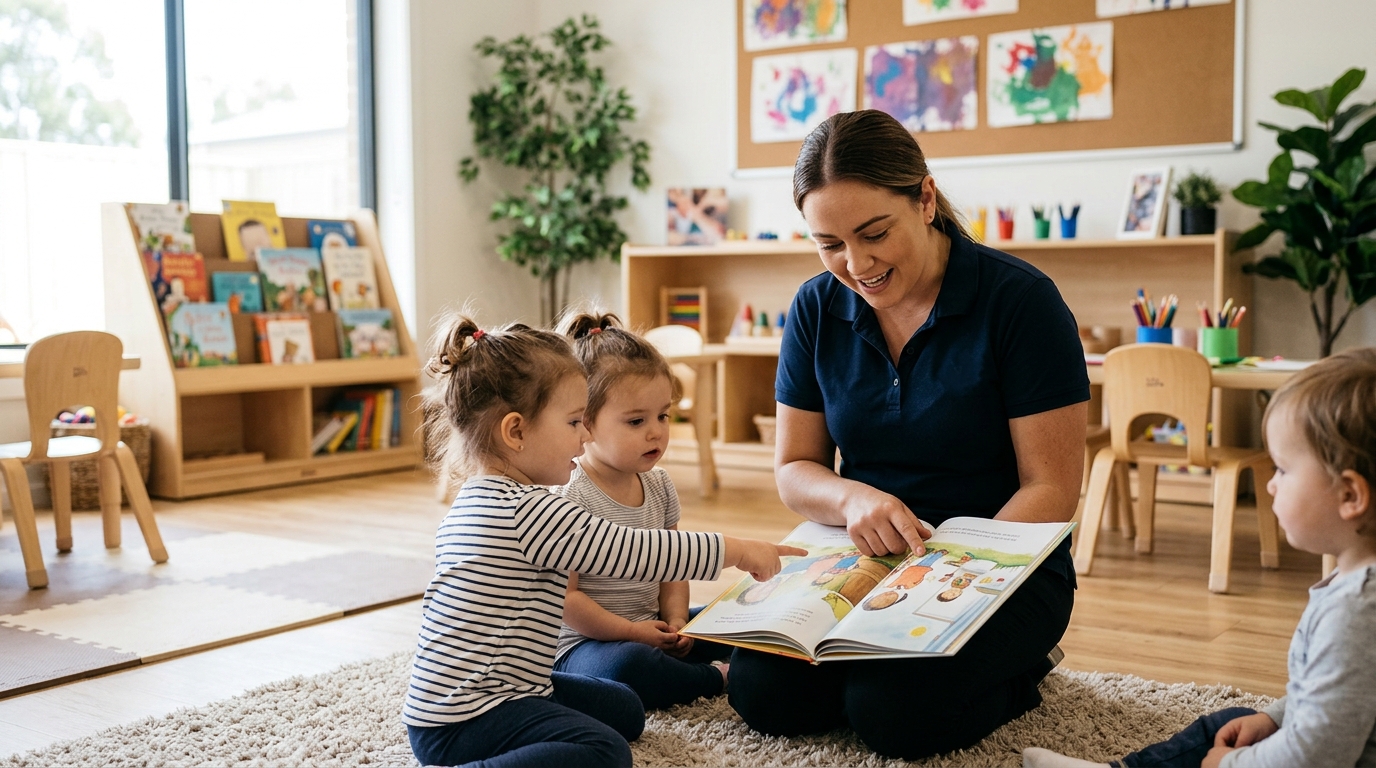
Early childhood educators recognize that the first five years of a child's life are the most critical period for brain development and language acquisition. According to data from the Australian Council for Educational Research, children who are exposed to rich, interactive language environments in their early years demonstrate significantly stronger reading and writing outcomes by school age. At Little Scholars School of Early Learning, we have built our curriculum around the belief that literacy is not just about reading books, but about engaging with the world through words, stories, and meaningful communication. This guide explores how our daily programs support early literacy and language development across all age groups. (Childcare Queensland Little Scholars)
The Foundations of Early Literacy
Literacy development begins long before a child can decode words. It starts with oral language, phonological awareness, and the joy of being read to. At Little Scholars, we view literacy as a holistic process that integrates listening, speaking, reading, and writing. Our educators are trained to create print-rich environments where children encounter words in various contexts throughout the day.
One of the core pillars of our approach is play-based learning. This method allows children to explore concepts naturally while educators scaffold their language skills. For example, during dramatic play, children might use specific vocabulary related to roles, such as "doctor," "patient," or "medicine." These interactions build the neural pathways necessary for complex sentence structures and narrative skills. Research indicates that children who engage in high-quality pretend play develop more advanced vocabulary and better social-emotional regulation than those who do not.
We also emphasize the importance of environment and sustainability in our literacy programs. By connecting language to the natural world, children learn descriptive adjectives and scientific terminology. Whether they are discussing the life cycle of a stingless bee or the properties of different soils in our outdoor explorers program, children are constantly expanding their lexical resources.
The Abecedarian Approach to Reading
A defining feature of our curriculum is the integration of the Abecedarian Approach. This evidence-based framework focuses on early language and literacy development through responsive, interactive teaching strategies. The Abecedarian Approach is a comprehensive early childhood intervention that emphasizes the importance of language-rich interactions from infancy.
Our educators utilize specific techniques from this approach, such as:
- Concurrent Talk: Narrating what the child is doing in real-time to build vocabulary.
- Expansion: Adding to the child's utterances to model more complex grammar.
- Recasting: Reformulating a child's incorrect statement into a correct one to provide implicit correction.
These strategies are not limited to classroom time. They are woven into every interaction, from meal times to nap routines. Studies on the Abecedarian Project have shown that participants had significantly higher rates of college graduation and better health outcomes later in life, highlighting the long-term impact of early language investment.
Daily Routines That Build Language
Language development does not happen in isolation. It is embedded in the rhythm of the day. At Little Scholars, we have designed our daily schedules to maximize opportunities for communication. Here is how literacy is supported throughout a typical day:
Morning Circle Time
Morning circle is a dedicated time for group interaction. Educators lead songs, rhymes, and story discussions that encourage children to listen actively and respond verbally. This routine helps children understand the structure of language, including rhythm, rhyme, and turn-taking. It also builds a sense of community, which is essential for confident communication.
Story Time and Book Week
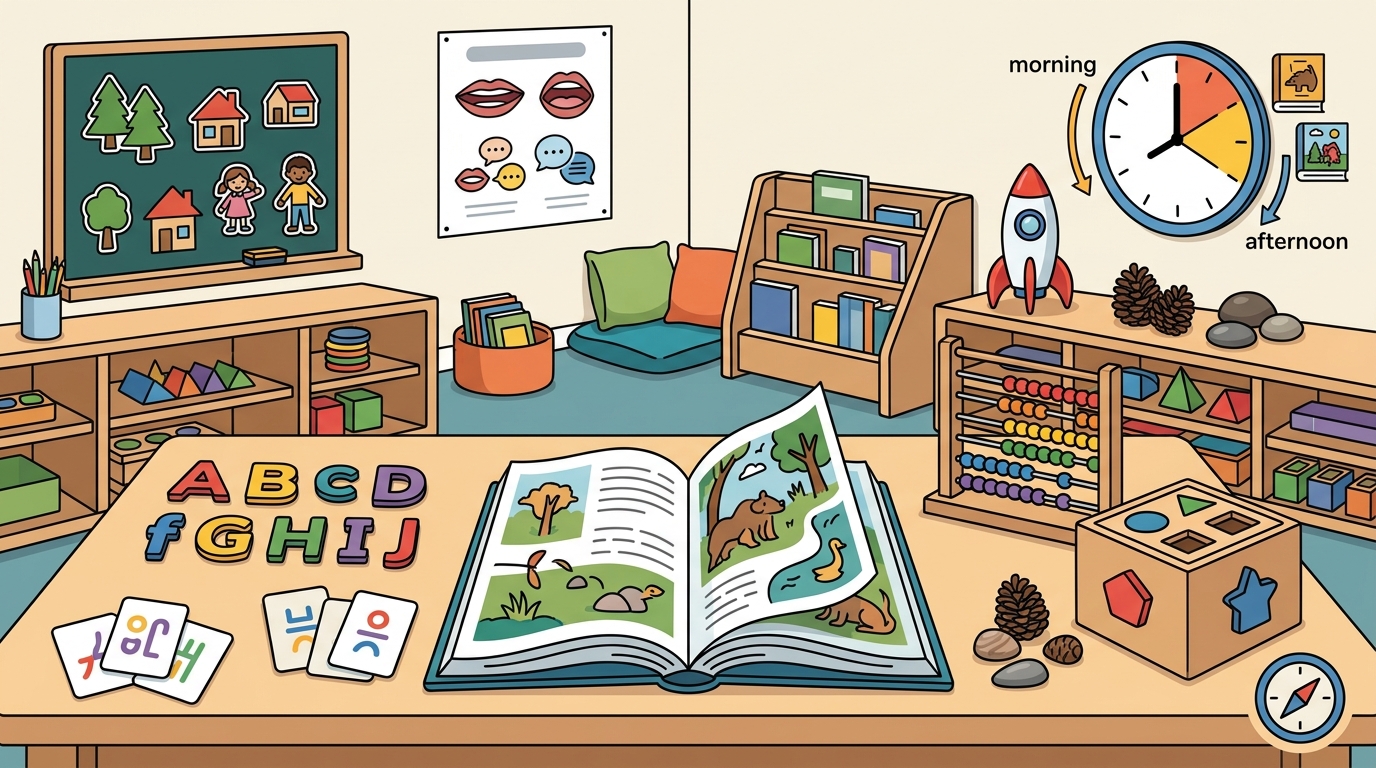
We prioritize daily story time, where educators read aloud to children using a variety of texts. These books are carefully selected to reflect diversity, challenge thinking, and introduce new concepts. During our annual Book Week, the entire campus celebrates reading with dress-ups, special story times, and author visits. This event reinforces the idea that books are sources of joy and imagination.
Outdoor Explorers (Bush Kinder)
Our Outdoor Explorers program takes learning into the natural environment. Children are encouraged to describe their observations, ask questions, and solve problems. For instance, when exploring a bushland setting, a child might say, "Look at the big tree!" An educator might respond, "Yes, that is a tall eucalyptus tree with rough bark." This exchange models precise language and encourages curiosity.
STEM Education and Vocabulary
Science, Technology, Engineering, and Mathematics (STEM) are integral to our literacy programs. We believe that scientific inquiry provides a rich context for language development. When children engage in hands-on experiments, they need vocabulary to describe their actions and findings.
Our STEM Education for Early Childhood initiatives include:
- Science Fairs: Annual events where kindergarten children present their experiments. They practice presenting their findings to peers and families, building public speaking skills.
- Engineering Challenges: Activities where children build structures using blocks or natural materials. They learn terms like "balance," "structure," and "foundation."
- Digital Literacy: We introduce age-appropriate digital tools to help children understand technology as a communication medium. This includes using tablets for recording stories or creating digital art.
By connecting STEM concepts to language, we ensure that children develop both critical thinking and communication skills simultaneously. This dual focus prepares them for the demands of modern schooling and future careers.
Embedding Indigenous Language and Culture
At Little Scholars, we are committed to Acknowledging Country and embedding Indigenous culture into our daily programs. We believe that respecting and learning about Aboriginal and Torres Strait Islander histories and languages is essential for all Australian children.
Our educators work closely with local Indigenous communities to incorporate authentic cultural experiences. This includes:
- Language Learning: Children are introduced to local Indigenous words for animals, plants, and natural elements. This expands their vocabulary and fosters respect for First Nations cultures.
- Storytelling: We share traditional stories and songs, teaching children about the importance of oral tradition in Indigenous cultures.
- Cultural Competence: Educators model cultural competence by creating inclusive environments where diversity is celebrated. This helps children develop empathy and understanding for people from different backgrounds.
This approach aligns with the National Quality Standard (NQS), which requires early childhood services to promote children's understanding of Aboriginal and Torres Strait Islander cultures.
Comparison of Age-Specific Literacy Programs
Literacy development varies significantly across age groups. Our programs are tailored to meet the specific needs of each stage. The table below summarizes how we support literacy at different ages.
| Age Group | Primary Focus | Key Activities | Outcome |
|---|---|---|---|
| Nursery and Infant Care (6 weeks - 15 months) | Oral Language and Bonding | Singing, babbling response, board books | Development of listening skills and attachment |
| Toddler Programs (15 months - 2 years) | Vocabulary Expansion | Labeling objects, simple stories, sensory play | Increased word bank and sentence formation |
| Junior & Senior Kindy (2 - 4 years) | Phonological Awareness | Rhyming games, letter recognition, dramatic play | Pre-reading skills and narrative ability |
| Kindergarten (4 - 5 years) | Emergent Literacy | Writing attempts, science fairs, complex storytelling | Preparation for formal schooling and reading |
As children progress through these stages, the complexity of language tasks increases. Educators continuously assess each child's progress and adjust their support accordingly. This individualized approach ensures that every child receives the guidance they need to thrive.
Key Takeaways
- Abecedarian Approach: We use this evidence-based framework to enhance language and literacy through responsive interactions.
- Daily Integration: Literacy is supported through morning circles, story time, and outdoor explorers every day.
- STEM Connection: Science and engineering activities provide rich contexts for vocabulary development.
- Cultural Inclusion: Indigenous language and culture are embedded in our curriculum to promote respect and understanding.
- Age-Specific Strategies: Programs are tailored to the developmental stage of each child, from nursery to kindergarten.
- Community Engagement: Events like Book Week and Science Fairs reinforce the joy of learning and communication.
- Play-Based Learning: We believe that play is the primary vehicle for early childhood development and literacy acquisition.
Frequently Asked Questions
How does Little Scholars support early reading skills?
We support early reading through the Abecedarian Approach, which focuses on interactive reading and language-rich environments. Our educators use techniques like concurrent talk and expansion to build vocabulary and comprehension.
What is the Abecedarian Approach?
The Abecedarian Approach is a comprehensive early childhood intervention that emphasizes the importance of language-rich interactions from infancy to improve long-term educational and life outcomes.
How do you incorporate Indigenous culture into literacy programs?
We incorporate Indigenous culture by teaching local language words, sharing traditional stories, and collaborating with local Indigenous communities to ensure authentic and respectful representation.
Are there specific activities for toddlers to build vocabulary?
Yes, toddlers engage in labeling objects, simple stories, and sensory play. These activities help them connect words with objects and actions, expanding their word bank.
How does STEM education relate to language development?
STEM activities provide a context for children to use descriptive language, ask questions, and explain their findings. This builds both scientific understanding and communication skills.
What role does play have in literacy development?
Play is central to our approach. Through dramatic play and exploration, children practice using language in meaningful ways, which enhances their narrative and social skills.
How can parents support literacy at home?
Parents can support literacy by reading daily, engaging in conversation, and encouraging curiosity. We provide resources and tips through our Family Benefits and blog sections.
Start Your Child's Journey
Early literacy is a lifelong gift. At Little Scholars, we are dedicated to nurturing this gift through our comprehensive, play-based programs. If you are looking for childcare centres in Brisbane or the Gold Coast that prioritize language development, we invite you to learn more about our approach.
Book a tour today to see our classrooms in action and meet our passionate educators. Visit our Book a Tour page to schedule a visit. You can also explore our Find a Campus page to locate the centre nearest to you.