
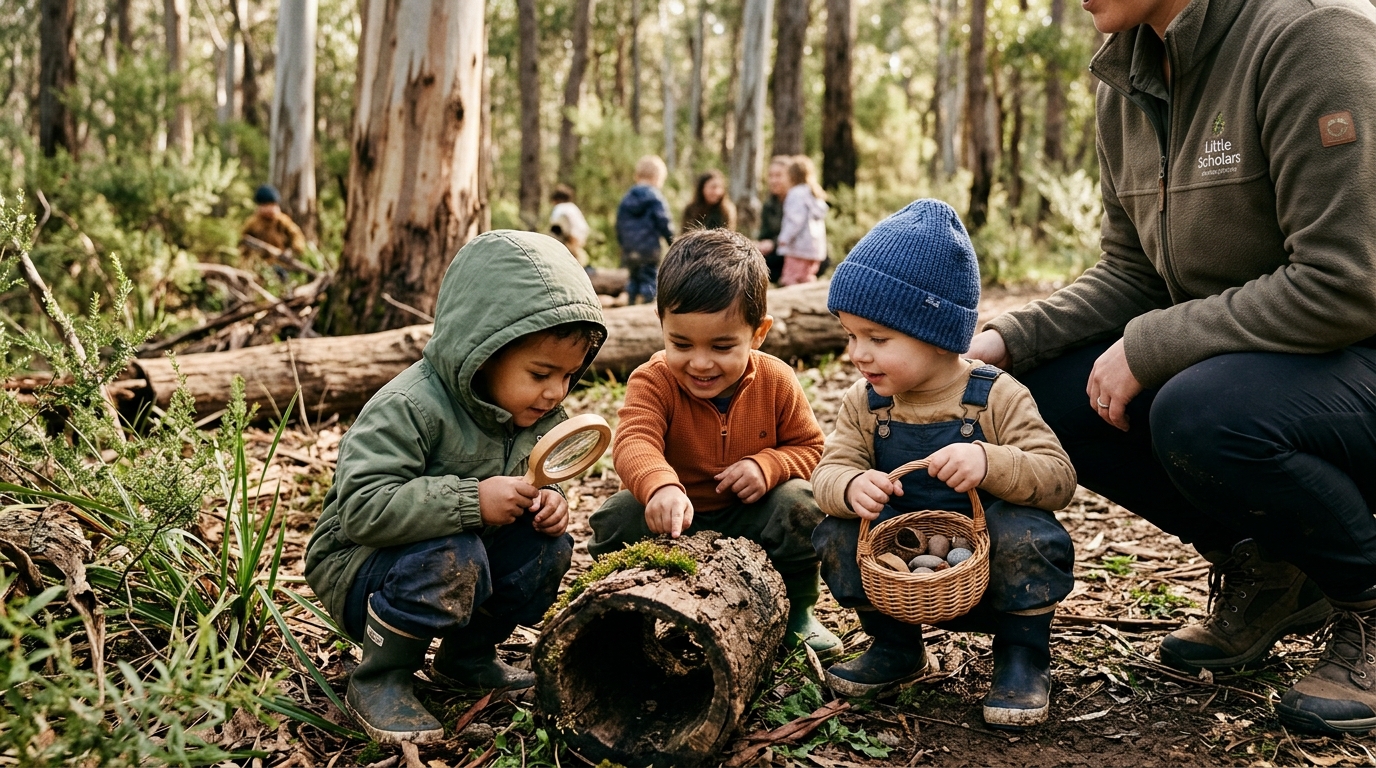
Research indicates that children who engage in regular outdoor play demonstrate significantly higher levels of physical activity and emotional resilience compared to their peers in traditional indoor settings. According to a 2023 report by the Australian Institute of Health and Welfare, early childhood education and care (ECEC) providers are increasingly integrating nature-based pedagogy to address rising concerns about childhood obesity and digital overuse. This shift is not merely a trend but a fundamental evolution in how we understand child development. Families seeking robust early learning options are now prioritizing programs that offer structured outdoor immersion, often referred to as Bush Kinder or nature-based learning.
What is Bush Kinder and How Does It Work?
Bush Kinder is an educational approach that takes early childhood education out of the classroom and into the natural environment. The term originates from the German concept of "Waldkindergarten," which emerged in the 1960s as a response to the industrialization of childhood. In this model, children spend a significant portion of their day outdoors, regardless of weather conditions, engaging in unstructured play, exploration, and discovery.
At its core, Bush Kinder is not just about playing in the park. It is a pedagogical framework where educators act as facilitators rather than directors. They observe children's interests and scaffold learning opportunities that arise naturally from the environment. For example, a child's interest in building a shelter can lead to lessons in physics, teamwork, and problem-solving. This method encourages children to take calculated risks, such as climbing trees or navigating uneven terrain, which builds confidence and physical coordination.
The program typically involves regular excursions to local bushland, parks, or dedicated nature play spaces. Educators are trained to identify natural resources that can stimulate curiosity, such as logs for balancing, sticks for drawing, or leaves for sensory exploration. This approach aligns with the Early Years Learning Framework (EYLF) in Australia, which emphasizes the importance of connection to country and community.
The Developmental Benefits of Nature-Based Learning
The impact of nature-based learning extends far beyond physical health. Studies published in the Journal of Environmental Psychology have shown that exposure to green spaces reduces cortisol levels in children, leading to lower stress and improved attention spans. When children are allowed to engage in free play in natural settings, they develop critical social skills such as negotiation, conflict resolution, and empathy.
One of the most significant benefits is the development of gross motor skills. Navigating natural terrain requires balance, strength, and spatial awareness that flat indoor floors cannot replicate. According to data from the Centers for Disease Control and Prevention, children who participate in regular outdoor physical activity are less likely to develop chronic health issues later in life. Furthermore, the sensory richness of the outdoors stimulates cognitive development. The unpredictability of nature forces children to think critically and adapt quickly, fostering creativity and innovation.
Additionally, nature-based programs often incorporate environmental stewardship. Children learn to respect living things and understand the interconnectedness of ecosystems. This early exposure to sustainability concepts creates a generation of environmentally conscious individuals who value conservation and ecological balance.
Little Scholars: Integrating Nature into the Curriculum
At Little Scholars School of Early Learning, we recognize that the natural world is one of the most powerful teachers a child can have. Our approach to outdoor education is deeply embedded in our daily routines, ensuring that every child, from nursery through to kindergarten, has regular access to nature-based experiences. We do not view outdoor play as an occasional extra but as a fundamental component of our curriculum.
Our Outdoor Explorers program, commonly known as Bush Kinder, is designed to provide children with the freedom to explore their local environment under the guidance of trained educators. This program is available across our campuses in Brisbane, the Gold Coast, Ipswich, and Redland Bay. Each campus leverages its unique geographical context to offer distinct nature-based experiences, whether that involves coastal bushland, suburban parks, or dedicated green spaces.
We also integrate nature into our broader learning framework through initiatives like our Annual Events and Experiences. These include seasonal camps, science fairs that utilize outdoor settings for experiments, and cultural celebrations that honor the land. Our educators are trained to identify "teachable moments" in nature, turning a simple walk in the bush into a rich learning opportunity about local flora, fauna, and Indigenous history.
Furthermore, our commitment to sustainability is reflected in our Acknowledgement to Country practices. We work closely with local Indigenous communities to ensure that our nature programs respect and celebrate the traditional custodians of the land. This includes learning about native plants, traditional uses of natural resources, and the cultural significance of specific landscapes. By embedding Indigenous perspectives into our outdoor education, we provide a holistic and respectful learning environment.
Managing Safety and Risk in Outdoor Environments
One of the most common concerns for parents considering Bush Kinder or nature-based programs is safety. It is important to distinguish between risk and hazard. A hazard is a source of potential harm, such as a broken branch or a poisonous plant, which should be removed or avoided. Risk, on the other hand, is the chance of injury or harm, such as climbing a tree or using a stick. Research suggests that allowing children to engage in manageable risk is essential for developing risk assessment skills and resilience.
At Little Scholars, we adhere to strict safety protocols while still encouraging adventurous play. Our educators undergo rigorous training in first aid, risk management, and outdoor pedagogy. Before any excursion, we conduct thorough risk assessments of the environment. We ensure that children are equipped with appropriate clothing, such as sturdy shoes and sun protection, to minimize physical harm.
We also maintain high staff-to-child ratios during outdoor activities to ensure constant supervision. Our educators are trained to observe children closely, intervening only when necessary to prevent serious harm. This approach allows children to experience the thrill of exploration while remaining safe. According to guidelines from ACECQA, early childhood services must balance the need for safety with the right of children to take risks in their play.
Additionally, we address environmental risks such as sun exposure, insect bites, and hydration. Our daily routines include regular sunscreen application, hat checks, and water breaks. We also educate children on how to identify and avoid potential dangers, such as not touching unknown plants or staying within designated play areas. This education empowers children to make safe choices independently.
Key Factors for Parents Choosing a Nature Program
When selecting an early learning center with a strong nature component, parents should look for several key indicators of quality. First, examine the curriculum documentation to see how outdoor learning is integrated. Is it a daily occurrence or a occasional field trip? Look for centers that explicitly mention nature-based pedagogy in their teaching philosophy.
Second, consider the qualifications of the educators. Do they have specific training in outdoor education or Bush Kinder methodologies? Educators who are passionate about nature are more likely to create engaging and meaningful experiences for children. Third, evaluate the safety protocols. Ask about staff-to-child ratios during outdoor activities, risk assessment procedures, and emergency response plans.
Finally, visit the campus and observe the children in action. Do they appear engaged, happy, and physically active? Are the educators interacting with the children in a supportive and encouraging manner? A high-quality nature program will show children who are confident, curious, and connected to their environment.
| Feature | Traditional Indoor Program | Nature-Based Program (e.g., Little Scholars) |
|---|---|---|
| Primary Learning Environment | Classroom-based, structured activities | Outdoor, unstructured exploration |
| Physical Activity Level | Moderate, limited space | High, varied terrain |
| Risk Management | Minimized risk, high supervision | Managed risk, risk assessment skills |
| Cultural Integration | Abstract concepts | Direct connection to Country |
| Weather Exposure | Controlled climate | All-weather engagement |
Key Takeaways
- Bush Kinder is a pedagogical approach that uses natural environments to facilitate child-led learning and development.
- Regular outdoor play is linked to improved physical health, emotional resilience, and cognitive function in early childhood.
- Little Scholars integrates nature into its curriculum through dedicated programs like Outdoor Explorers and cultural connections to Country.
- Safety in nature programs is managed through rigorous risk assessments and trained educators who distinguish between hazard and risk.
- Parents should evaluate educator qualifications, safety protocols, and the frequency of outdoor activities when choosing a center.
- Nature-based learning supports the development of gross motor skills, creativity, and environmental stewardship.
- Indigenous perspectives are often woven into nature programs to provide a deeper understanding of the local landscape and its history.
Frequently Asked Questions
What age groups can participate in Bush Kinder programs?
Bush Kinder programs are typically designed for children from toddler age through to kindergarten, usually ranging from 18 months to 6 years old. The activities are adapted to suit the developmental stage of each child, ensuring that even the youngest participants can engage safely and meaningfully with the natural environment.
How does Little Scholars handle bad weather during outdoor sessions?
We believe that all weather is good weather for outdoor play. Our educators are trained to dress children appropriately for rain, wind, or cold, using high-quality waterproof gear. We have dedicated sheltered areas on our campuses where children can continue to engage in nature-based activities even during heavy rain. This approach helps children develop resilience and an appreciation for the changing seasons.
Is Bush Kinder safe for children who are not confident climbers?
Yes, absolutely. Bush Kinder is not about forcing children to climb trees or jump from heights. It is about providing opportunities for risk-taking at the child's own pace. Educators observe each child's comfort level and encourage them to explore within their capabilities. For children who are less confident, we provide alternative challenges and gradual scaffolding to build their confidence over time.
How is Indigenous culture integrated into the nature program?
We integrate Indigenous culture by learning about the local Traditional Custodians and their connection to the land. This includes exploring native plants, learning traditional stories, and participating in cultural ceremonies. Our educators work with local Indigenous communities to ensure that our programs are respectful and accurate, providing children with a deep understanding of the cultural significance of the natural environment.
What should I pack for my child's Bush Kinder day?
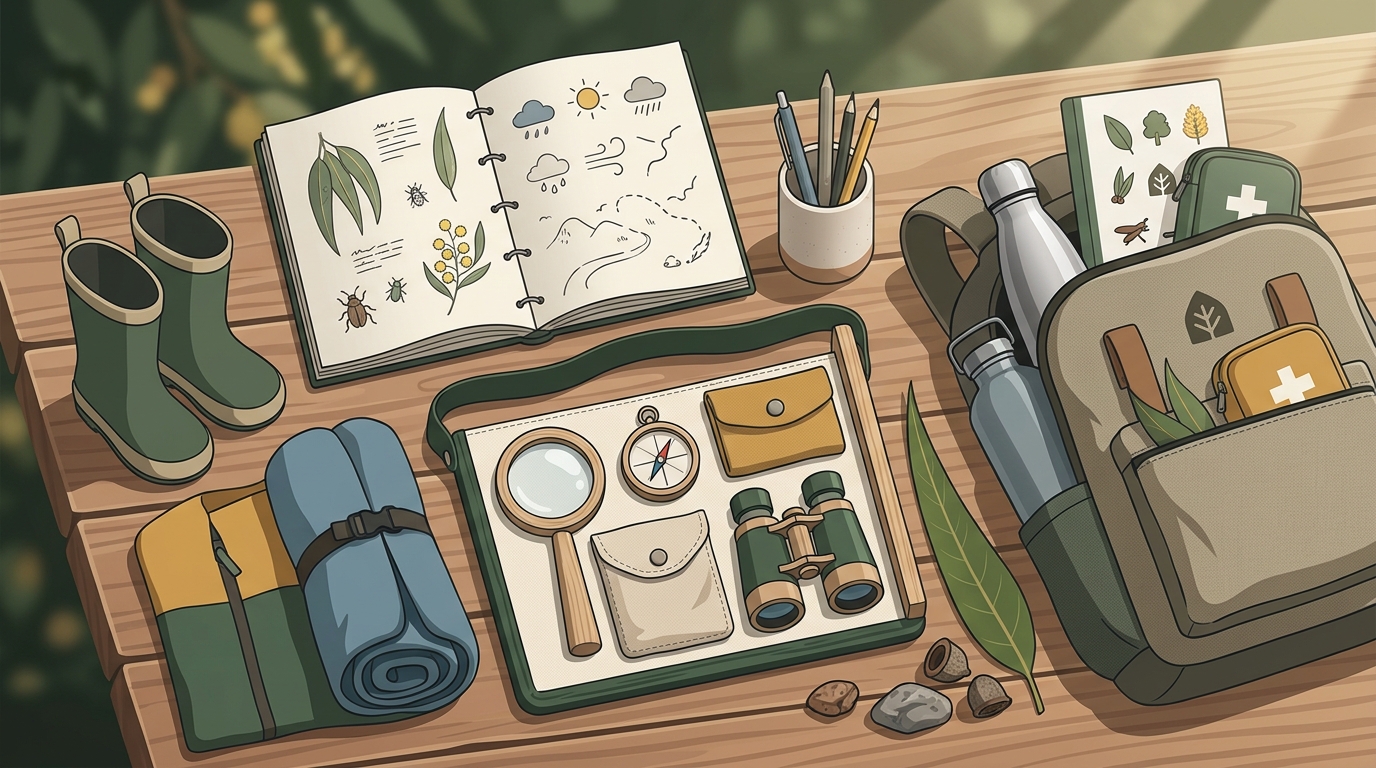
We provide a detailed packing list for all families, which typically includes sturdy shoes, weather-appropriate clothing, a hat, sunscreen, and a water bottle. We also recommend bringing a change of clothes in case of messes. Our educators ensure that children are dressed appropriately for the day's weather conditions, so you do not need to worry about over-preparing.
Do you offer before and after school care with outdoor components?
Yes, our Before and After School Care programs include significant outdoor play time. We recognize that these hours are an opportunity for children to decompress and engage in free play after a day of structured learning. Our outdoor spaces are designed to be inviting and stimulating, encouraging children to continue their exploration and social interaction.
How does nature-based learning support STEM education?
Nature is a natural laboratory for STEM (Science, Technology, Engineering, and Mathematics) concepts. Children learn about biology by observing plants and animals, physics by experimenting with water and sand, and engineering by building structures with natural materials. Our Science Fair and other events often incorporate these elements, showing children how scientific principles apply to the world around them.
Book Your Campus Tour Today
Experience the difference that nature-based learning can make for your child. At Little Scholars, we invite you to see our Outdoor Explorers program in action and discover how we integrate the natural world into our daily curriculum. Whether you are in Brisbane, the Gold Coast, Ipswich, or Redland Bay, our campuses offer unique opportunities for your child to grow, learn, and thrive in the great outdoors.
Ready to start your journey? Book a tour today to meet our educators and explore our facilities. You can also find your campus to view our specific locations and enrollment details. Join our community of families who value holistic, nature-connected early learning.