
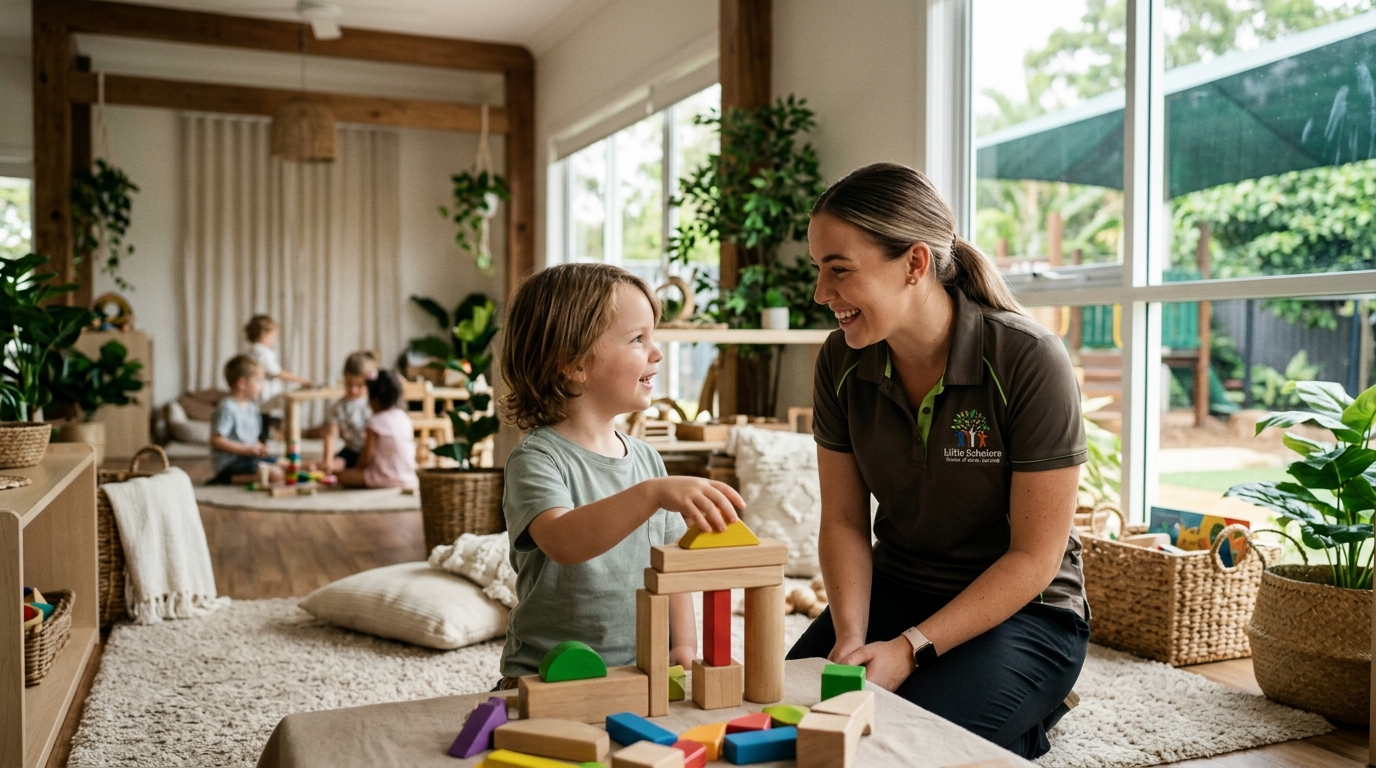
Finding the right early learning environment is one of the most significant decisions a family makes. According to recent educational research, the quality of early childhood education has a measurable impact on long-term academic and social outcomes. This guide provides a structured approach to evaluating childcare options in South East Queensland, ensuring you select a centre that aligns with your family's values and your child's developmental needs. (Childcare Queensland Little Scholars)
Understanding Educational Philosophy
The foundation of any high-quality early learning centre is its educational philosophy. This is not just a marketing tagline but a operational framework that dictates daily interactions, learning activities, and conflict resolution strategies. When visiting potential centres, ask educators to explain their core teaching beliefs in plain language. (Childcare Parenting Blog Queensland)
Play-based learning is a dominant approach in Australian early childhood education. Play-based learning is a pedagogical approach where children learn through active exploration and interaction with their environment. This method encourages curiosity and problem-solving skills. However, the implementation varies significantly between providers. Some centres may offer structured play, while others focus on free-flowing exploration. (Bush Kinder Program Queensland)
At Little Scholars, the philosophy extends beyond the classroom. The centre integrates Indigenous culture into everyday programs, ensuring children develop respect for diversity from a young age. This approach is supported by the Australian Government Department of Education, which emphasizes the importance of cultural competence in early learning frameworks.
Evaluating Curriculum and Pedagogy
A robust curriculum should be holistic, addressing cognitive, physical, social, and emotional development. Look for centres that offer a diverse range of experiences, including STEM (Science, Technology, Engineering, and Mathematics) education, outdoor exploration, and creative arts.
STEM education for early childhood is critical for developing logical thinking and spatial awareness. STEM education for early childhood is the introduction of scientific and mathematical concepts through age-appropriate, hands-on activities. Centres that incorporate technology, such as virtual reality (VR) tools, can provide immersive learning experiences that engage young minds in unique ways.
Additionally, consider the centre's approach to literacy. Programs like the Abecedarian Reading approach focus on early language development through interactive and engaging methods. This method is backed by studies showing that early literacy interventions can significantly improve reading outcomes in later school years, as noted by the National Institute of Child Health and Human Development.
Assessing Environment and Safety
The physical environment plays a crucial role in a child's sense of security and engagement. A well-designed centre should feel like an extension of the home, with spaces that are both stimulating and calming. Safety is paramount, and all centres must adhere to strict regulatory standards.
Little Scholars places a strong emphasis on child safety, with a dedicated commitment to safeguarding policies. This includes rigorous staff screening, secure entry systems, and regular safety audits. The centre also prioritizes environmental sustainability, teaching children to respect nature through outdoor explorers and bush kinder programs.
When touring a centre, observe the cleanliness of the facilities, the quality of the toys and resources, and the layout of the rooms. Are there dedicated spaces for quiet play and active exploration? Is the outdoor area safe and engaging? These details provide insight into the centre's daily operations and priorities.
Assessing Staff Quality and Ratios
The educators are the heart of any early learning centre. Their qualifications, experience, and passion for teaching directly impact the quality of care your child receives. In Australia, early childhood educators must meet specific qualification standards set by the Australian Children's Education & Care Quality Authority (ACECQA).
Staff-to-child ratios are legally mandated to ensure adequate supervision and individual attention. For example, in Queensland, the ratio for children under three years old is typically 1:4, while for older children, it is 1:5. However, high-quality centres often maintain lower ratios to provide more personalized care.
During your visit, engage with the educators. Ask about their professional development, their tenure at the centre, and their approach to child development. A stable, experienced team indicates a healthy work environment, which translates to better care for children. Little Scholars, for instance, highlights its leadership team's extensive experience in the early childhood sector, ensuring a consistent and high standard of education.
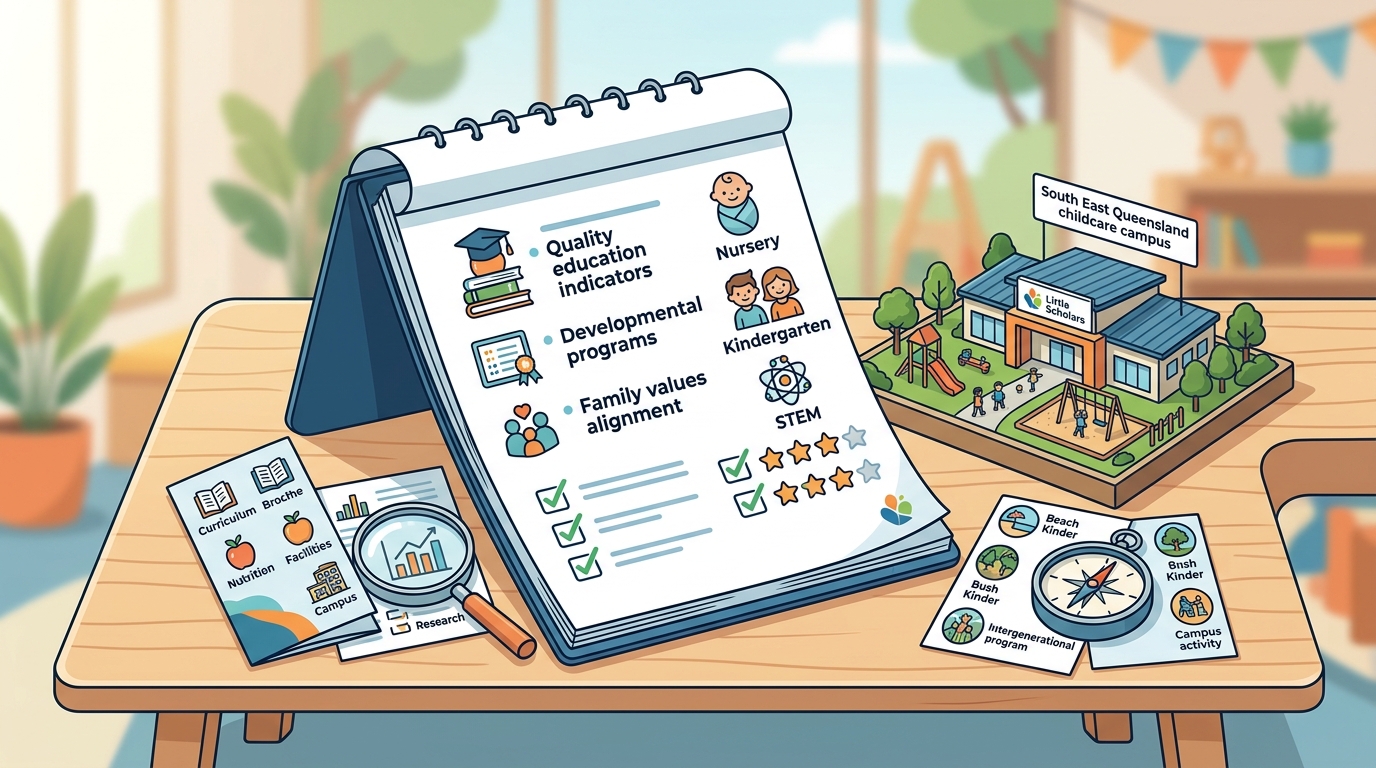
Practical Logistics and Costs
While educational quality is paramount, practical considerations such as location, hours of operation, and cost are also critical. The right centre should fit seamlessly into your family's routine.
Location is a major factor. A centre that is close to home or work reduces travel stress and allows for more time with your child. Little Scholars has multiple campuses across Brisbane, the Gold Coast, Ipswich, and Redland Bay, making it accessible to many families. You can find a campus near you to explore local options.
Costs in early childhood education vary based on location, services, and subsidies. The Child Care Subsidy (CCS) is available to eligible families to help with the cost of approved childcare. Understanding how the CCS works is essential for budgeting. The Services Australia website provides detailed information on eligibility and payment rates.
Consider the additional services offered, such as before and after school care, vacation care, and extended hours. These services can provide valuable flexibility for working parents. Little Scholars offers comprehensive before, after-school, and vacation care programs to support busy families.
Key Takeaways
- Educational Philosophy: Ensure the centre's teaching beliefs align with your family's values, particularly regarding play-based learning and cultural inclusion.
- Curriculum Depth: Look for diverse programs including STEM, literacy (e.g., Abecedarian Reading), and outdoor exploration.
- Safety Standards: Verify the centre's child safety policies and environmental sustainability practices.
- Staff Qualifications: Check educator qualifications and staff-to-child ratios, ensuring they meet or exceed ACECQA standards.
- Location and Accessibility: Choose a centre that is convenient for your daily routine, with multiple campus options if possible.
- Financial Planning: Understand the Child Care Subsidy (CCS) and total costs, including any additional fees for extended care.
- Community Engagement: Prioritize centres that foster strong family-community connections through events and parent involvement.
Frequently Asked Questions
What is the best age to start early learning?
Early learning can begin from six weeks of age. Infants benefit from nurturing care and sensory stimulation, while toddlers and preschoolers engage in more structured play-based learning to develop social and cognitive skills.
How does the Child Care Subsidy work?
The Child Care Subsidy (CCS) is a payment made to childcare providers on behalf of eligible families. The amount depends on family income, activity levels, and the type of care. You can calculate your subsidy using the CCS Calculator provided by Little Scholars.
What is Bush Kinder?
Bush Kinder is an outdoor education program where children learn in natural environments. It promotes resilience, creativity, and a connection to nature, aligning with the National Quality Standard for outdoor experiences.
How do I book a tour?
You can book a tour by visiting the Book a Tour page on the Little Scholars website. Tours are available at all campuses to help you experience the environment firsthand.
What is the Abecedarian Reading approach?
The Abecedarian Reading approach is an early literacy program that focuses on phonemic awareness and vocabulary development through interactive and engaging activities, supporting early language acquisition.
Are there before and after school care options?
Yes, many centres, including Little Scholars, offer before and after school care. This service provides extended hours to support working families and ensures continuity of care.
How does Little Scholars support Indigenous culture?
Little Scholars embeds Indigenous culture into its curriculum through storytelling, music, and cultural celebrations. This approach fosters respect and understanding of Aboriginal and Torres Strait Islander histories and traditions.
Next Steps
Choosing the right early learning centre is a journey that requires careful consideration and personal interaction. By evaluating educational philosophy, curriculum, environment, staff quality, and practical logistics, you can make an informed decision that supports your child's growth. Little Scholars invites you to experience our nurturing environment firsthand. Schedule a tour today to discover how we can be an extension of your family.