
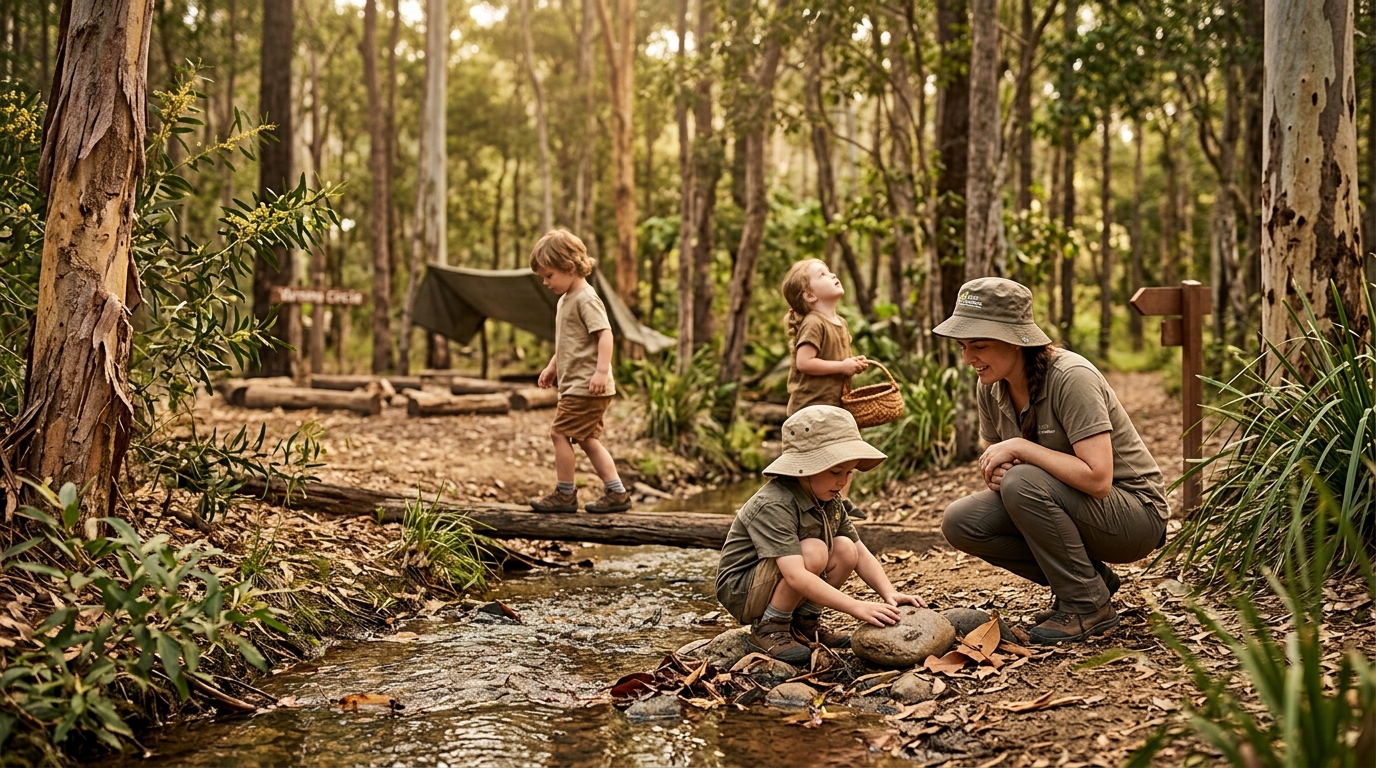
Outdoor education is no longer a niche preference but a fundamental component of modern early childhood development. Research from the Royal Children's Hospital indicates that regular exposure to natural environments significantly reduces stress hormones and enhances cognitive flexibility in young children. As parents across South East Queensland seek alternatives to traditional classroom settings, the demand for programs that blend structured learning with unstructured nature exploration has surged. This guide explores how early learning centres are integrating bush kinder methodologies to foster resilience, curiosity, and holistic growth.
What is Bush Kinder?
Bush Kinder is an educational philosophy that prioritizes outdoor play as the primary vehicle for learning. According to ABC Education, this approach originated in Australia as a response to the increasing digitalization of childhood, aiming to reconnect children with the natural world. It is not merely "playtime outside" but a pedagogical strategy where educators facilitate learning through interaction with the environment.
At its core, Bush Kinder is about risk management and sensory engagement. Children climb trees, build shelters, and navigate uneven terrain. These activities develop gross motor skills and spatial awareness in ways that indoor play cannot replicate. The program encourages children to listen to their bodies and assess risks independently, fostering a sense of agency and confidence that translates into academic and social settings.
The Little Scholars Approach to Nature
Little Scholars School of Early Learning has embedded nature-based education into its core curriculum across its South East Queensland campuses. Their Outdoor Explorers program is designed to provide children with regular, structured opportunities to engage with the local environment. This initiative is not limited to a single location but is a key pillar of their educational philosophy across Brisbane, the Gold Coast, and Ipswich.
Integrating Indigenous Culture
A critical component of Little Scholars' nature program is the integration of Indigenous culture. The organization emphasizes Acknowledgement to Country as a daily practice, ensuring that children understand the deep connection between First Nations peoples and the land. Educators work to embed cultural competence by exploring local flora, fauna, and storytelling traditions. This approach ensures that nature education is not only about ecology but also about respecting the history and custodianship of the land.
STEM in the Outdoors
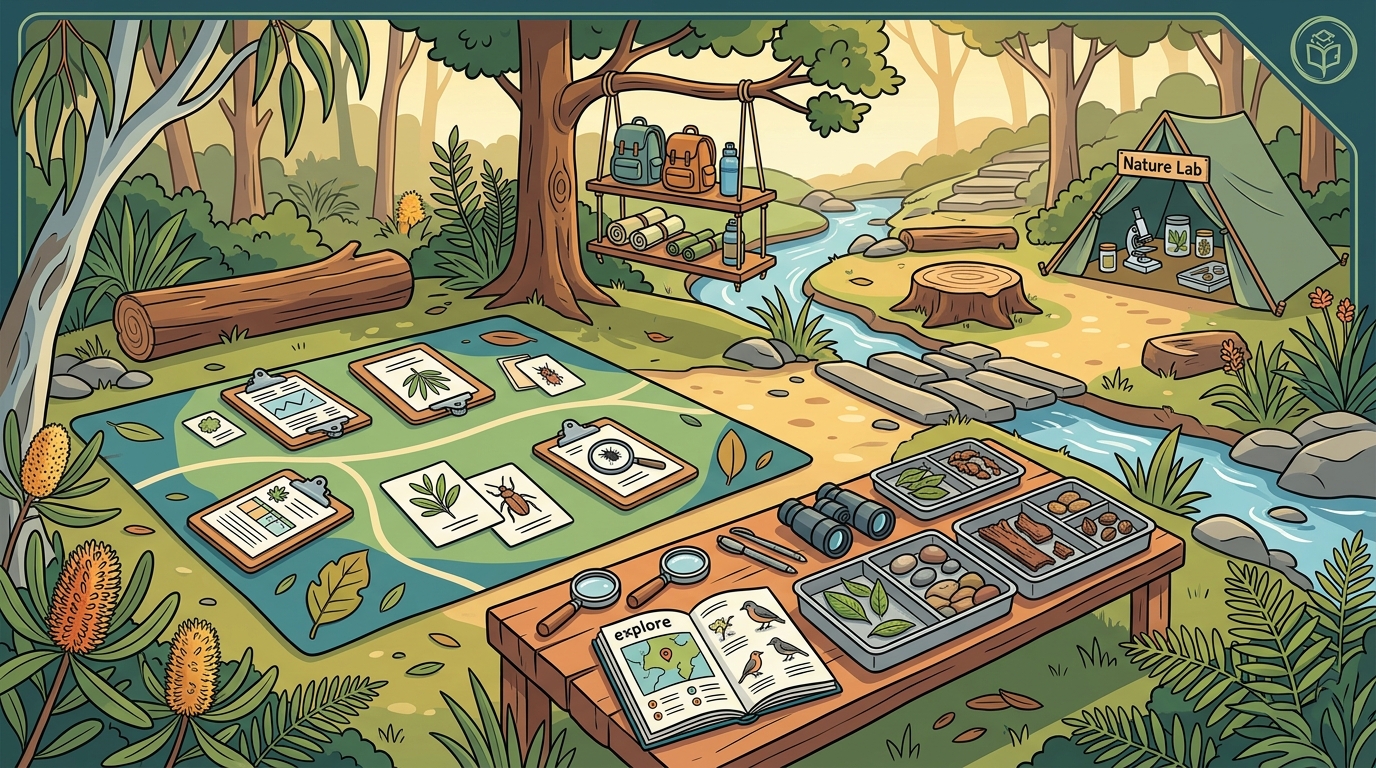
Little Scholars also combines nature play with STEM (Science, Technology, Engineering, and Mathematics) education. Their STEM Education framework encourages children to ask questions about the natural world. For example, during a bush walk, educators might guide children to observe insect habitats or test the buoyancy of different natural materials. This method transforms the outdoors into a dynamic laboratory where abstract concepts become tangible experiences.
Benefits of Nature-Based Learning
The shift towards outdoor learning is supported by a growing body of evidence regarding its developmental benefits. Harvard Health Publishing notes that time spent in green spaces is linked to improved attention spans and reduced symptoms of ADHD in children. For early learners, this means that nature programs can directly support their readiness for formal schooling.
Physical Health and Resilience
Nature programs promote physical activity in a way that is often more engaging than structured sports. Climbing, balancing, and running over varied terrain build muscle strength and coordination. Furthermore, exposure to natural elements helps strengthen the immune system. The World Health Organization highlights that access to green spaces is a determinant of public health, particularly for children whose developing bodies are more susceptible to environmental stressors.
Social and Emotional Growth
Unstructured play in nature requires negotiation and collaboration. When children build a fort or navigate a stream, they must communicate their ideas and resolve conflicts. This social interaction is often more complex and nuanced than indoor play because the environment is less predictable. Little Scholars supports this through their Family Time Program, which encourages parents to observe and participate in these natural interactions, strengthening the home-school connection.
Comparing Nature Programs
Not all early learning centres offer the same level of outdoor integration. Understanding the differences can help parents make an informed choice. The table below outlines the key distinctions between traditional centres and those with dedicated nature programs.
| Feature | Traditional Centre | Nature-Integrated Centre (e.g., Little Scholars) |
|---|---|---|
| Outdoor Time | Limited to scheduled playground breaks | Daily, extended outdoor exploration sessions |
| Curriculum Focus | Indoor-centric, screen-based resources | STEM and Indigenous culture integrated into nature |
| Risk Management | Highly controlled, safe-play equipment | Calculated risk-taking and resilience building |
| Cultural Connection | Occasional cultural days | Daily Acknowledgement to Country and local ecology |
Key Takeaways
- Definition: Bush Kinder is a pedagogical approach that uses outdoor environments as the primary classroom for holistic child development.
- Little Scholars Model: Little Scholars School of Early Learning offers the Outdoor Explorers program across multiple South East Queensland campuses.
- Cultural Integration: Programs emphasize Indigenous Acknowledgement to Country to foster respect for local custodians and land.
- STEM Connection: Nature play is used to teach scientific concepts, such as ecology and physics, through hands-on experimentation.
- Health Benefits: Regular exposure to nature is linked to improved immune function and reduced stress levels in children.
- Community Focus: Events like Camp Out bring families together to celebrate the outdoors.
- Availability: These programs are available in Brisbane, Gold Coast, Ipswich, and Redland Bay regions.
Frequently Asked Questions
What is the difference between Bush Kinder and regular outdoor play?
Regular outdoor play is often unstructured and supervised from a distance. Bush Kinder is a structured pedagogical approach where educators actively facilitate learning through interaction with the natural environment, focusing on risk assessment, STEM concepts, and cultural connection.
Does Little Scholars offer Bush Kinder in all locations?
Little Scholars integrates nature-based learning into its curriculum across its campuses in Brisbane, Gold Coast, Ipswich, and Redland Bay. Specific activities may vary based on the local environment of each centre.
How does Little Scholars incorporate Indigenous culture into nature programs?
Educators embed Indigenous culture by teaching children about local flora, fauna, and storytelling traditions. This ensures that children learn to respect the land and its First Nations custodians.
What age groups can participate in nature programs?
Nature-based learning is suitable for all ages, from infant care from 6 weeks to kindergarten. Activities are adapted to the developmental stage of the child, ensuring safety and engagement.
Are there safety concerns with outdoor learning?
Safety is a top priority. Educators are trained in risk-benefit assessment, allowing children to take calculated risks that build resilience while maintaining a safe environment. Little Scholars also adheres to strict Child Safeguarding protocols.
How can I find a centre with a strong nature program?
Look for centres that explicitly mention "Bush Kinder," "Outdoor Explorers," or "Nature Play" in their curriculum. Little Scholars provides a campus finder to help parents locate centres with these specific offerings.
What is the "Outdoor Explorers" program?
The Outdoor Explorers program is Little Scholars' dedicated initiative for regular, structured outdoor learning. It includes activities like bush walks, nature scavenger hunts, and environmental science projects.
Start Your Child's Nature Journey
Choosing a centre with a strong nature program is an investment in your child's long-term health and development. Little Scholars School of Early Learning offers a unique blend of STEM education, Indigenous cultural respect, and outdoor exploration. To experience our Outdoor Explorers program firsthand, book a tour at your nearest campus today.